

How Burroughs Novels Blended Genres and Changed Science Fiction Forever
Overview
Introduction
If you love diving into new worlds through books, you know the struggle. You scroll through endless lists of famous books, hoping to find something that truly stands out. It’s easy to feel lost.
There’s so much good writing out there. And sometimes, the stories that shaped everything we love today get pushed aside.
That’s exactly what happened with burroughs novels. Edgar Rice Burroughs wrote stories that changed science fiction and fantasy forever. His books, like Tarzan of the Apes and A Princess of Mars, first appeared in pulp magazines. These cheap magazines used rough wood pulp paper, which gave them the name pulp magazines.
They sold for pocket change starting in the late 1800s.
Here’s the thing. Burroughs didn’t stick to one genre. He mixed sci-fi, adventure, romance, and fantasy all in one book. That crossover approach made his work unforgettable. Even today, in 2026, you can see his influence everywhere.
Maybe you love best vampire novels for adults or the latest rebecca yarros books. That’s great. But understanding where genre blending started will give you a deeper appreciation for modern storytelling. Burroughs was a pioneer.
This article will show you why his crossover legacy matters. It will help you discover books you might have missed. And it will make your sci-fi reading journey much richer.
For more on how classic stories live on in new forms, check out our list of the best sci-fi book adaptations.
Ready to explore more great reads? Browse Top Lists to find your next favorite book.
The Literary Landscape Before Burroughs: The Birth of Genre Boundaries
Before Edgar Rice Burroughs picked up his pen, the literary world looked very different. Stories about strange worlds, lost civilizations, or impossible adventures existed, but nobody had a neat label for them. Most people called this kind of writing "scientific romance" or simply "adventure." It all lived in the same big, messy pile.
Think about it. If you walked into a bookstore in 1900 and asked for a "science fiction novel," the clerk would have no idea what you meant. That term didn’t exist yet. The word "sci-fi" wasn’t even a twinkle in anyone’s eye. According to the New York Society Library, publisher Hugo Gernsback only coined the phrase "science fiction" in 1929. Before that, everything was just… stories.
Here is where things get interesting. The early 1900s saw the rise of pulp magazines. These cheap, disposable publications, named for the rough wood pulp paper they used, started popping up everywhere. Frank Munsey pioneered the format in 1896 with The Argosy, and soon the market was flooded. These magazines needed to sell. And the easiest way to sell was to put stories into tidy little boxes.
Suddenly, you had western pulps, romance pulps, mystery pulps, and adventure pulps. The pulp magazine era, which ran from about 1896 to 1955, created these genre silos. Magazines labeled themselves as "science fiction" or "fantasy." They told writers what to write and readers what to expect. This was great for business. But it was lousy for creativity.
Readers were pushed into corners. If you loved romance stories, you stuck to romance pulps. If you craved adventure, you bought adventure magazines. You rarely got to mix your favorites. Sound familiar? Even today, in 2026, we see this same silo effect with things like best vampire novels for adults or rebecca yarros books. We love our categories. But sometimes they hold us back.
Then Burroughs arrived. He did not care about the boxes. He took the adventure of a lost world, mixed in the romance of a stranded hero, added the scientific wonder of Mars, and stirred it all together in A Princess of Mars. He broke the rules. And readers went wild.
Understanding this history helps you see why Burroughs was so important. He proved that stories did not have to fit one shelf. They could be everything at once.
For a deeper look at how classic storytelling shaped modern romance, check out our guide to Jane Austen novels. The blending of genres started long before Burroughs, but he pushed it to a new level.
Ready to discover more books that break the mold? Browse Top Lists to find your next great read.
Burroughs’ Novels as a Crossover Pioneer: Barsoom, Tarzan, and Beyond
The previous section showed you why genre silos existed. Now let’s look at how Edgar Rice Burroughs smashed them. He did not just write adventure stories. He wrote stories that squeezed multiple genres into one wild ride.
Let’s start with his most famous planet: Barsoom. That is the name Burroughs gave to Mars. The first Barsoom tale was serialized in 1912. It introduced readers to John Carter, a Civil War veteran who wakes up on the Red Planet. This sounds like science fiction. But Burroughs packed it with sword fights, lost cities, and a love story. He combined what we now call "planetary romance" with "sword-and-planet" action. Many experts believe this directly paved the way for space opera. The Wikipedia entry for Barsoom describes it as a rich, detailed world with alien societies and advanced technology. It was a classic adventure dressed in sci-fi clothes.
Now think about Tarzan. The lord of the jungle is one of the most famous characters in all of fiction. But what genre is he? His story is a survival guide. It explores feral children and human nature. That is science. It also features a hidden city and strange rituals. That is fantasy. One analysis of Burroughs notes how he mixed European fantasy with the action of early American westerns. Tarzan is an adventure hero, a scientific anomaly, and a romantic idol all at once. These stories have been adapted so many times. If you love seeing books turned into movies, you will enjoy our list of the 10 best IMDb popular sci-fi book adaptations.
Burroughs was a true crossover pioneer. According to the Edgar Rice Burroughs Universe website, he created the first fully cohesive literary universe a century before "crossover" was a buzzword.
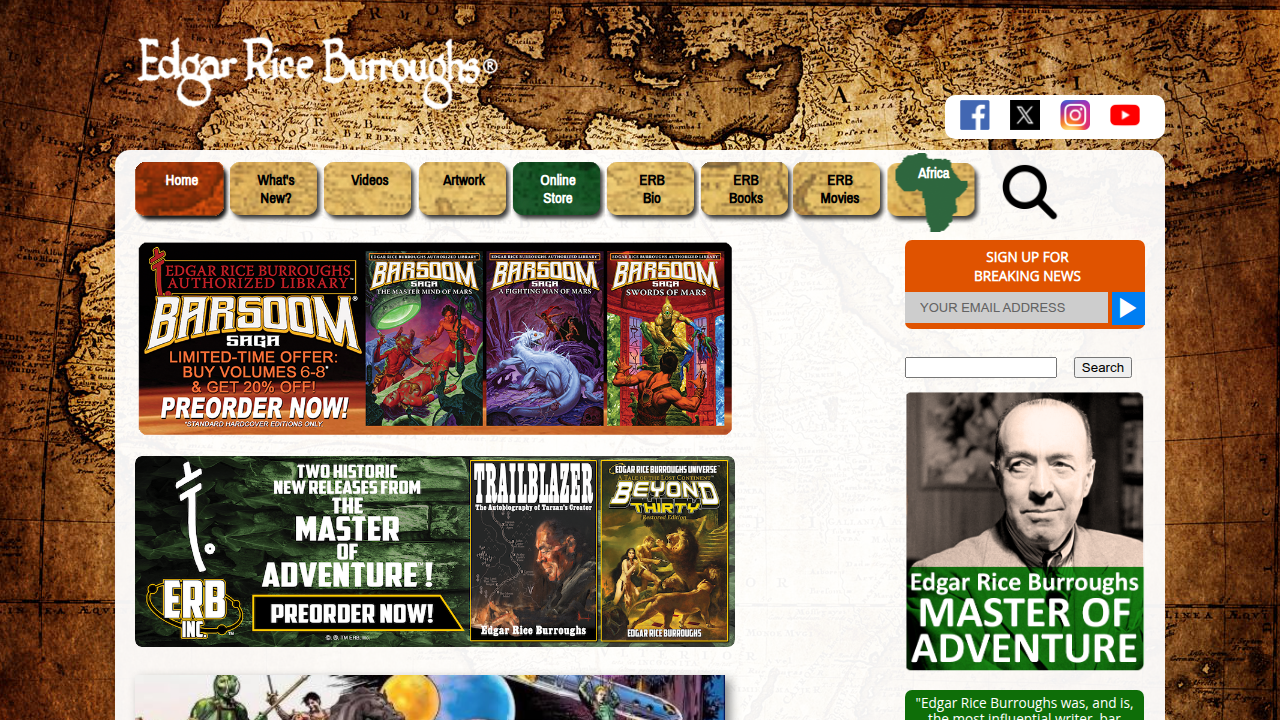
He used speculative technology and alien societies, but he never lost the fast pacing of a pulp adventure. He proved you could have a brainy idea and a thrilling chase in the same story.
Sound familiar? It should. In 2026, we see this everywhere. Think about the best vampire novels for adults. They mix horror, romance, and action. Look at the massive popularity of Rebecca Yarros books. Her "Empyrean" series blends dragon fantasy, military strategy, and steamy romance. Burroughs opened the door for all of it.
If you love stories that refuse to sit still, you are in the right place. Find your next genre-bending read by checking out our Browse Top Lists.
The Mechanics of Genre Crossover in Burroughs’ Work
Have you ever read a book that felt like three different stories at once? That is exactly how Burroughs wrote. He had a formula. And once you see it, you will spot it everywhere.
Let’s break down his method.
The Earthman Formula
Burroughs loved one setup more than any other. He took an ordinary Earthman and threw him into a completely strange world. John Carter goes from the Civil War to Mars. Tarzan goes from a jungle upbringing to English society. This trick worked because it let readers explore a weird new place through a character they understood.
But here is the key. These worlds were not just different. They were packed with two things at the same time: advanced science and supernatural wonder. On Barsoom, John Carter finds flying ships and telepathy. He also finds strange gods and ancient curses. According to one analysis, Burroughs combined "European elements of fantasy and horror with the naive expansionist style of early American westerns." That is a fancy way of saying he mashed every cool idea he could find into one story.
Pacing for the Pulp Era
Burroughs did not write for scholars. He wrote for people who bought magazines on newsstands. Those readers wanted action. So Burroughs borrowed the cliffhanger structure from adventure serials. Every chapter ended with a sword fight, a narrow escape, or a shocking revelation. He then applied that fast, breathless pacing to cosmic themes like Martian civilizations and lost worlds.
The Edgar Rice Burroughs Universe site notes that he created "the first expansive, fully cohesive literary universe" decades before anyone used the word "crossover." He made Mars feel as real as your backyard. He gave it history, politics, and science. But he never slowed down the story to explain it all. He trusted readers to keep up.
Why It Still Works Today
Think about the most popular genre-blending books right now. The best vampire novels for adults mix horror, romance, and action just like Burroughs mixed sci-fi and fantasy. The Rebecca Yarros books throw dragon battles, military strategy, and steamy romance into one series. Burroughs figured out a century ago that readers want everything at once.
His formula is still the gold standard for crossover fiction. If you want to see how it plays out in other classic works, check out our guide to Jane Austen novels. Even she blended romance with social commentary. Burroughs just added ray guns and alien princesses.
So next time you pick up a burroughs novels, pay attention to how he juggles all those pieces. It looks effortless. But it took a master to pull it off.
If you want to find more books that mix genres without slowing down, explore our curated recommendations. Browse Top Lists and discover your next crossover favorite.
Burroughs’ Influence on Iconic Sci-Fi Authors
You might not know Edgar Rice Burroughs by name. But if you have ever read a science fiction book, you have felt his influence. Some of the biggest names in sci-fi grew up reading his work. They did not just enjoy his stories. They built their entire careers on what he taught them.

The Giants Who Borrowed His Blueprint
Let us start with the heavy hitters. Ray Bradbury said Burroughs made him want to become a writer. Arthur C. Clarke credited the Barsoom series with sparking his lifelong love of space. Carl Sagan even mentioned Burroughs in his famous TV show Cosmos. These were not casual fans. They were active followers of his work.
Then you have Heinlein and Asimov. Both of them openly acknowledged how Burroughs’ world building shaped their own. Heinlein’s future history would not have existed without Barsoom’s detailed Martian society. Asimov’s Foundation series borrowed the same sense of a vast, living universe that Burroughs created first.
According to the ERBzine tribute page, people like Alex Raymond, Francis Nowlan, Frank Paul, and even George Lucas were all influenced by John Carter. That is a lineup of legends right there.
How the Scientific Romance Evolved
Before Burroughs, science fiction was mostly about gadgets and theories. It was cold. Burroughs added heart. He took the "scientific romance" tradition and made it about adventure and emotion. He showed that you could have rocket ships AND romance. You could have alien wars AND moral questions.
His formula stuck. Books like the best vampire novels for adults still use his trick of mixing genres. Authors like Rebecca Yarros throw military strategy and dragon battles together the same way Burroughs mixed swords and telepathy. The tradition lives on.
If you want to see how this blending plays out in a completely different genre, check out our guide to Jane Austen novels. She mixed social commentary with romance. Burroughs added ray guns.
Why It Matters Today
Here is the thing. Burroughs did not invent science fiction. But he made it popular. He proved that readers wanted more than just facts. They wanted a universe that felt alive. He gave them Mars with history, politics, and princesses.
The burroughs novels still sell because of that magic. And every time you pick up a modern blockbuster from Bradbury, Clarke, or their descendants, you are reading a book that exists because Burroughs showed the way.
Ready to explore more books that changed the genre? Browse Top Lists and discover the stories that built science fiction from the ground up.
How Burroughs Novels Expand the Modern Sci-Fi Canon
You would think that a writer who inspired Bradbury, Clarke, and Lucas would sit at the top of every "best of" list. But here is the strange truth. Many literary critics still leave Burroughs off their official sci-fi canon. They call his work "pulp fiction." They say it is not serious enough.
That is a mistake.
Why the Canon Needs Burroughs
The official sci-fi canon often favors intellectual writers. Think Huxley. Think Orwell. Think Philip K. Dick with his deep philosophical questions. These authors are brilliant. But they represent only one side of science fiction.
Burroughs represents the other side. The fun side. The adventurous side. The side that makes you stay up late because you just cannot put the book down.
According to the ERBzine tribute page, creators like Alex Raymond and George Lucas openly credited Burroughs with shaping their vision. That means the modern sci-fi we love today from Star Wars to Guardians of the Galaxy owes a debt to these burroughs novels.
If you leave him out, you are missing the foundation of the entire space opera tradition.
What Collectors and Students Look For
Students of the genre do not stop at the literary giants. They dig deeper. They want to understand where the tropes came from. The dying planet. The heroic stranger. The alien princess. The lost civilization.
All of these started or were perfected in Burroughs’ work.
Serious collectors actively seek first editions of his books. The Intelligent Collector feature highlights how original artwork and inscribed first editions of Burroughs’ novels draw passionate bids at auction.

Some copies sell for hundreds of dollars. That is not just nostalgia. That is recognition of his importance.
Modern Authors Still Borrow From Him
Here is the most telling sign of his relevance. Authors writing today still reference Burroughs. You see his influence in epic space battles. You see it in stories where one person changes the fate of an entire world.
Even genres that seem far removed still use his tricks. The best vampire novels for adults often mix action, romance, and world building just like Burroughs did. Rebecca Yarros books blend military conflict with personal stakes in a way that feels very Barsoom. The pattern is everywhere once you learn to see it.
Think about how J.K. Rowling built a hidden world with its own rules and politics. That is pure Burroughs. For a deeper look at that kind of immersive world building, check out our guide on the Harry Potter books in order.
The Definitive List Problem
Here is the problem for fans. No single official canon includes every important book. Different critics make different lists. Burroughs often gets skipped because his style feels old fashioned or his politics have aged poorly.
But a complete understanding of science fiction requires knowing where it came from. That means reading at least one burroughs novels. A Princess of Mars is the perfect starting point. It is short, fast, and shows you exactly why the genre fell in love with adventure.
If you want to understand the full story of science fiction, you cannot skip the storyteller who made it popular in the first place. Burroughs built the highway that everyone else drives on today.
Browse Top Lists and find the books that truly shaped modern sci-fi from the ground up.
Tracking Down Definitive Editions of Burroughs Novels: A Collector’s Guide
If the previous section convinced you that Burroughs belongs in the canon, you might be wondering where to find his actual books. Not just any copy. The kind that feels special. The kind that sits on a shelf and tells a story of its own.
Collecting burroughs novels has become a serious hobby. And in 2026, it is more accessible than you might think.
Why First Editions Matter
First editions of the Barsoom series and Tarzan books are the crown jewels for collectors. These are the copies that readers held in their hands when John Carter first set foot on Mars. They carry history.
According to the Intelligent Collector feature, inscribed first editions and original artwork from Burroughs’ worlds draw passionate bids at auction. Some copies sell for hundreds or even thousands of dollars. That is not just about owning a book. It is about owning a piece of sci-fi history.
You can find many Burroughs books on eBay for $5 to $25 according to ERB Firsts. But a copy with a nice dust jacket can jump to $150 or more. That one piece of paper makes a huge difference.
Serial vs. Book: Understanding the Difference
Here is something many new collectors miss. Burroughs originally published most of his stories in magazines like The All-Story. The Barsoom series first appeared as serials before being released as complete books.
That matters because the first book editions are rarer and more valuable than the magazine versions. The Biblio guide explains how to identify first editions from Edgar Rice Burroughs, Inc., the publisher that handled many of his later printings. Knowing which printing you have can save you from overpaying for a common copy.
Condition, Dust Jackets, and Provenance
Three things determine value more than anything else.
Condition is king. A book with torn pages, writing inside, or a broken spine is worth much less than a clean copy. Collectors want books that look like they just arrived from the bookstore.
Dust jackets are the real prize. Most Burroughs books from the early 1900s lost their jackets long ago. Finding one with the original dust jacket intact can multiply the value by ten or more.
Provenance matters too. If a book belonged to someone famous or has a personal inscription from Burroughs himself, the price goes way up. Heritage Auctions has run dedicated sales featuring the Edgar Rice Burroughs Collection of Roy and Dela White, showing how provenance drives serious collector interest.
For a deeper look at how classic stories hold up across generations, you might enjoy our guide on the Harry Potter books in order. The collecting principles are surprisingly similar.
Where to Start Your Collection
You do not need to spend a fortune. Start with a reading copy of A Princess of Mars. Get a paperback from the 1960s or 1970s. Read it. Love it. Then decide if you want to chase first editions.
Check the official Edgar Rice Burroughs website for ongoing sales. As of early 2026, they have been running regular offers to help collectors expand their libraries.
The adventure of collecting Burroughs is almost as good as the adventures inside the books themselves.
Browse Top Lists and discover which editions serious collectors hunt for next.
Summary
This article explains how Edgar Rice Burroughs broke early 20th‑century genre silos by combining adventure, romance, fantasy, and speculative science across series like Barsoom and Tarzan. It traces the literary context before Burroughs, shows the mechanics of his