

Oblivion Movie Review for Book Lovers
Overview
Introduction
Have you ever watched a sci-fi movie and thought, This feels like it should be a book? You are not alone. Science fiction fans often struggle to separate cinematic experiences from their literary counterparts.

A great movie can spark a hunger for the deeper world building that only pages can deliver. And sometimes, a movie borrows so heavily from classic sci-fi ideas that it feels like a love letter to the genre itself.
That is exactly the case with Oblivion (2013) . This Tom Cruise film offers a rich case study in how sci-fi movies borrow from and inspire books. The critics were split right down the middle. On Rotten Tomatoes, the film holds a 54% critics score, with the consensus saying it "looks great" but has a "story that meanders." Yet audiences have kept coming back, and recent streaming numbers show the film has found a second life as what some call Tom Cruise’s most overlooked sci-fi hit.
So why does Oblivion matter for book lovers? Because beneath its glossy visuals and drone battles, this movie is built on themes that science fiction literature has explored for decades: identity, memory, and what it means to be human in a broken world. This Oblivion movie review takes a different approach. Instead of just judging the film on its own, we look at it through a book lover’s lens. We ask what it owes to the written page and what it offers back to readers.
Along the way, we will connect the dots to other films like Conclave movie and Palm Springs movie, and we will explore how an influencer movie review might miss the deeper literary threads that make a story stick. If you are the kind of reader who watches a film and then needs to find the novel that matches its soul, this review is for you.
One of the best ways to scratch that itch after a movie like Oblivion is to dive into the books that shaped the genre. We have put together a list of the best sci-fi book adaptations that capture the same spirit. If you want to keep the journey going, start by browsing our curated rankings for more great reads.
Let us dig into what makes Oblivion a fascinating case study for anyone who loves both movies and books.
Oblivion Movie Overview and Critical Reception
Let us start with the basics. If you have not seen Oblivion yet, here is the setup. The year is 2077. Earth has been wrecked by an alien war, and most of humanity has left for a moon of Saturn. Jack Harper (Tom Cruise) stays behind as a drone repairman. His job is to maintain the machines that suck up the last of the planet’s resources. He lives in a sleek tower with his partner Victoria (Andrea Riseborough). Every day is the same. Every day is a routine. Until Jack starts finding objects that do not belong, and his memories begin to crack.
That is the plot engine for a story that turns into a full blown mystery about identity, cloning, and hidden truths. It sounds like classic science fiction. And that is exactly why the movie is so interesting to talk about.
What the Critics Said
When Oblivion hit theaters in 2013, the critics were not sure what to make of it. On Rotten Tomatoes, the film holds a 54% critic score based on 228 reviews. The average rating sits at 5.9 out of 10. As the official critics consensus puts it, Oblivion "looks great" but its "story meanders."
Many reviewers praised the visual design. The landscapes, the drone ships, the sky tower it all looks stunning. But they also pointed out that the plot feels borrowed from other, better science fiction works. If you have read a lot of classic sci fi, you might feel that way too.
Yet here is the twist. Audiences have been kinder. On IMDb, the film holds a 7.2 out of 10. And recent streaming numbers show that Oblivion has become Tom Cruise’s most overlooked sci fi hit. People keep coming back to it.
Maybe because the themes of memory and identity never get old. Or maybe because it scratches an itch that only book lovers truly understand.
Box Office and Reach
Oblivion earned $286 million worldwide against a $120 million budget. That is a solid return. It made enough money to prove that audiences wanted thoughtful, slow burn science fiction. But it did not become a cultural phenomenon like Inception or The Matrix. It stayed in a quieter corner of the genre. And for readers who love deep world building and philosophical questions, that quiet corner is exactly where to look.
Why This Matters for Book Lovers
Here is the thing. If you are the kind of reader who finishes a novel and then wants to watch something that feels like a companion piece, Oblivion delivers. It is not a direct adaptation of any single book. But it pulls from the same well. Themes of simulated reality, lost identity, and the cost of war are staples of the best science fiction literature. In fact, many of the ideas in Oblivion echo classic novels that explore what happens when you cannot trust your own memory.
That is why we recommend pairing your viewing with a good reading list. If you want to explore the books that inspired movies like this one, check out our curated list of the best sci fi book adaptations. You will find stories that dig even deeper into the same territory.
And if you are ready to find your next great read, take a moment to Browse Rankings. You will discover curated lists, deep dives, and reading recommendations that guide you through the best the genre has to offer.
Next, we will look at where Oblivion gets its ideas from. Because if you pay attention, you will see fingerprints of classic sci fi novels all over this film.
The Sci-Fi Literary Roots of Oblivion
Now that you know how the Oblivion movie was received, let us peel back the surface. If you felt like the story seemed familiar, you are not wrong. Director Joseph Kosinski did not hide his influences. He looked straight to the giants of science fiction literature. And honestly, that is why the movie still works in 2026.
The Philip K. Dick Connection
Let us start with the biggest name. Philip K. Dick. You have probably seen his fingerprints all over Hollywood. Movies like Blade Runner, Total Recall, and Minority Report are all adapted from his work. Oblivion is not a direct adaptation. Kosinski made that clear. But as Salon noted, many people see it as "another Philip K. Dick rehash." The reason is simple. Dick wrote about fabricated realities, false memories, and people trapped in artificial worlds. Jack Harper’s whole life in Oblivion is built on a lie. That is pure Dick territory.
The film does more than borrow a vibe. It pulls from specific stories. The idea of a man who cannot trust his own memories echoes "We Can Remember It For You Wholesale," the story that inspired Total Recall. Jack Harper believes he chose this life. But the truth is much darker. The themes of identity swapping and perspective shifts also appear in Robert A. Heinlein’s The Moon is a Harsh Mistress, where a computer gains consciousness and questions reality. Kosinski himself confirmed that the film pays homage to the 60s and 70s sci-fi that shaped him.
Visual and Thematic Parallels
But the influences do not stop with Dick and Heinlein. Look at the world of Oblivion. The ruined Earth, the silent machines, the sense of something watching from above. That feels a lot like Arthur C. Clarke’s Childhood’s End, where an alien race oversees humanity with hidden motives. The same goes for Stanisław Lem’s Solaris, where a planet creates illusions based on the memories of the people studying it. Jack Harper’s whole reality is a projection. The drones that patrol the wasteland are like the silent, unknowable force in Solaris.
Some critics have even called Oblivion a movie that "wishes desperately that it were based on a story by Philip K. Dick," as Blue Towel Productions put it. That might sound harsh, but it is also a compliment. It means the film reaches for the same depth that makes Dick’s work timeless.
Why This Matters for Readers
Here is the thing. If you love Oblivion, you have a whole library of books waiting for you. The movie is a gateway drug for serious science fiction. It introduces you to ideas that authors like Dick, Clarke, and Lem spent entire careers exploring. An influencer movie review might compare Oblivion to the time loop drama of the Palm Springs movie or the hidden world of the Conclave movie. But the deepest roots are in literature.
That is why we recommend using Oblivion as a starting point. Watch it again. Notice the clues. Then pick up the books that shaped it. You will find stories that go even deeper into what memory and identity really mean.
If you are ready to dive in, start with a book that plays with the same themes of identity and perspective. You can Read Book 1 of a modern series that mixes absurd comedy with the same kind of reality bending questions. It is a fun, thoughtful way to keep the Oblivion energy alive.
How Oblivion Compares to Classic Sci-Fi Books
We have talked about the roots of this movie. Now let us look at how Oblivion stands next to the classic science fiction books that came before it. This oblivion movie review would not be complete without seeing where the story fits in the bigger library of great sci-fi.
Shared Themes
Memory manipulation is the biggest theme in Oblivion. Jack Harper thinks his past is real. But it is just a program. That idea comes straight from Philip K. Dick. As Salon noted, the movie feels like a Philip K. Dick rehash to many viewers. That is not a bad thing. Dick wrote classic books about fake realities like The Three Stigmata of Palmer Eldritch and Do Androids Dream of Electric Sheep?.
The movie wishes desperately that it were based on a story by Philip K. Dick. That quote might sound harsh. But it actually shows how high the movie aims. It wants to make you question your own mind. That is what the best sci-fi books do.
Post-apocalyptic landscapes also connect Oblivion to classic books. The ruined Earth is not just a pretty background. It is a character. Books like A Canticle for Leibowitz and The Drowned World use the same broken world setting to ask deep questions about humanity.
The Lone Hero Arc
The story structure in Oblivion follows a classic path. The lone hero discovers a hidden truth about his world. This arc appears in many foundational science fiction books.
Think about The Moon is a Harsh Mistress or Childhood’s End. The hero starts small and then learns how much bigger the universe really is.
Many of these stories have been turned into movies. You can find a great list of popular sci-fi book adaptations that use the same kinds of surprises. The "wake up and see the truth" moment always works when it is done well.
Visual Influences
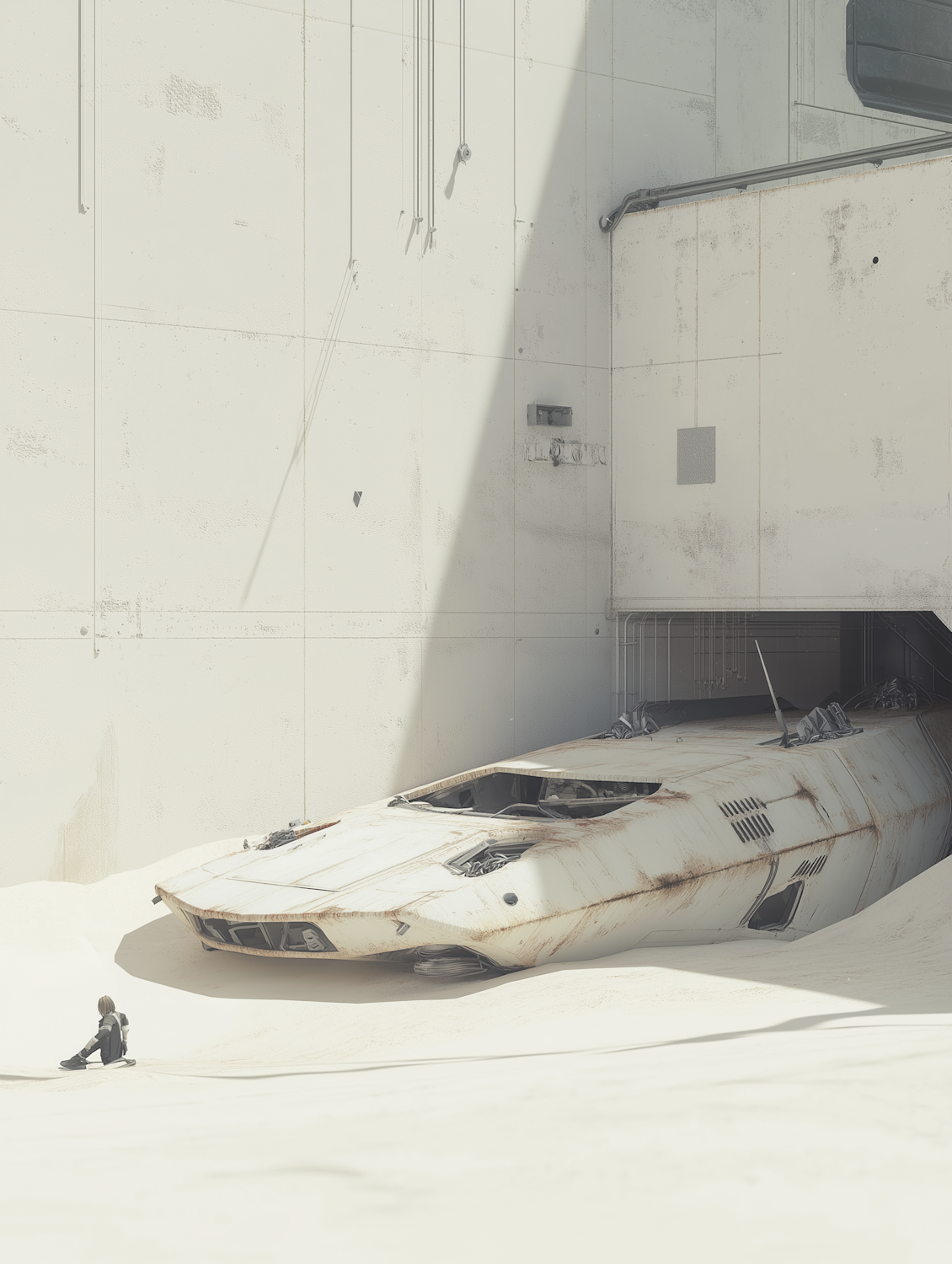
The look of Oblivion owes a lot to classic sci-fi book covers. Director Joseph Kosinski confirmed that the film pays homage to 60s and 70s sci-fi. The white suits, the bubble ship, the drone that looks like a floating eye. All of it feels like a painting by Chris Foss or John Berkey.
These artists illustrated the book covers that inspired a generation of sci-fi fans. Oblivion brings those painted worlds to life. It is like watching a living book cover for two hours.
Why This Comparison Matters
Here is the thing. An influencer movie review might compare Oblivion to the time loop of the Palm Springs movie or the hidden society in the Conclave movie. Those are fair comparisons. But the truest family tree for Oblivion grows from the soil of science fiction literature.
If you loved the feeling of this movie, the books that inspired it will take you much deeper. They ask the same questions about memory and identity. They just have more room to explore.
Ready to start reading? You can Read Book 1 of a modern series that plays with the same reality bending ideas. Or Browse Rankings to find the perfect classic sci-fi novel for your next adventure.
Recently Reviewed Sci-Fi Books on BestSciFiBooksOfAllTime.com
Now that you understand how Oblivion connects to classic sci-fi, you might want to find books that pull you into that same kind of world. Our editorial team has picked five recently reviewed titles that will scratch that itch. Each review on our site includes a full synopsis, a deep thematic analysis, and a rating based on literary merit and genre impact.
These books were chosen because they share the DNA of Oblivion. They make you question reality. They explore memory. They show you broken worlds and hidden truths.
Here are the titles we have added to our rankings.
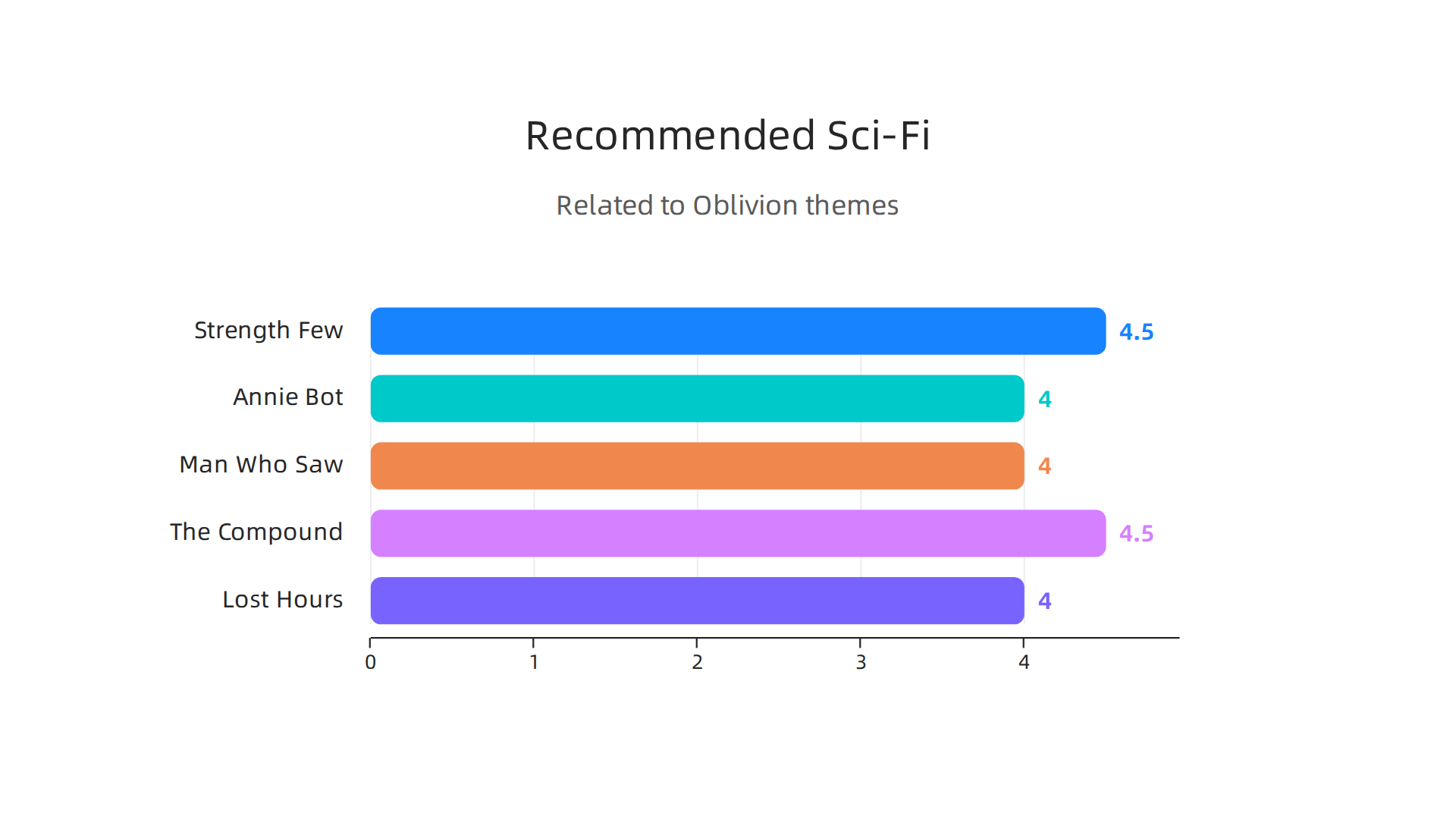
1. Strength of the Few by James Islington
This is a powerful military sci-fi novel that follows a small group of soldiers caught in a conflict that spans generations. The story plays with identity and sacrifice in ways that will remind you of Jack Harper’s journey. Rating: 4.5/5. It landed on Grimdark Magazine’s best of 2025 list and fits perfectly for anyone who loves the lone hero arc.
2. Annie Bot by Sierra Greer
What happens when a machine thinks it has a soul? This award nominated novel digs into artificial intelligence and the pain of a manufactured identity. It is a quieter book than Oblivion. But the ache of a being who discovers her past is a lie hits just as hard. Rating: 4/5. It was featured as one of the award winning sci fi novels of 2025 by Five Books. If you want a book that feels like the emotional center of the movie, start here.
3. The Man Who Saw Seconds by Alexander Boldizar
This one is wild. A man can see five seconds into the future. That power tears apart everything he thought he knew about free will and fate. The theme of a controlled reality is right in line with the Tet’s manipulation in Oblivion. Rating: 4/5. It also made the award winning sci fi novels of 2025 list and will keep you turning pages fast.
4. The Compound by Aisling Rawle
This novel was a standout on the Goodreads Readers’ Favorite Science Fiction 2025 list. It imagines a sealed off community where no one remembers the outside world. Sound familiar? It shares the core mystery of Oblivion: the hero lives inside a carefully built lie. The compound is just like Jack Harper’s sky tower. Rating: 4.5/5. It is a top pick for our site.
5. The Book of Lost Hours by Hayley Gelfuso
Also a Goodreads Choice Awards nominee, this book bends time and memory in a beautiful way. A woman keeps losing hours of her life. She starts to see the hidden pattern. The paranoia and slow discovery make it a perfect companion to the movie. Rating: 4/5.
Why These Books Matter
We did not just pick five random popular books. Each one connects to the big questions that make Oblivion stick with you. The conclave movie and palm springs movie play with time and hidden knowledge too. But books can go deeper. They let you sit inside the character’s doubt for pages.
These reviews are part of our growing library. You can check out lists of popular sci-fi book adaptations to see how many of these kinds of stories make it to the screen. And if you want a full path to your next great read, we have you covered.
Ready to find your next obsession? Browse Rankings and discover curated lists and deep dives that guide you to the best science fiction has to offer.
Why Curated Reviews Matter for Sci-Fi Readers
Let us be honest. Picking a new sci-fi book in 2026 feels overwhelming. Thousands of titles hit shelves every year. The global book market is worth over $142 billion, and the science fiction section keeps growing faster than most readers can keep up. Information overload is real. You scroll through Amazon, Goodreads, and BookTok, and you still end up unsure what to read next. That is exactly why curated reviews matter more now than ever.
A good review does more than say "this book is good." It gives you context. It tells you why a story works. It connects the dots between a new novel and the classics you already love. When you read an oblivion movie review, you want to know if the film holds up against the books that inspired it. The same logic applies here. You want a recommendation that stands on solid ground, not just hype.
That is where our approach comes in. Every review on BestSciFiBooksOfAllTime.com is vetted for accuracy. We do not just grab a blurb from the back cover and slap a rating on it. We cite external sources like the Goodreads Choice Awards nominees list and Pan Macmillan’s best-of roundups.

We compare each book to the broader genre canon. When we say a novel shares DNA with Oblivion, we explain exactly how.
Trust is the hardest thing to build online. Every influencer movie review or book recommendation competes for your attention. But there is a difference between a random opinion and a well researched analysis. We disclose our biases. We tell you if a book leans literary or pulpy. We help you decide if it fits your taste, not ours.
Think about movies like the conclave movie or the palm springs movie. Both play with time and hidden knowledge. A good review of either would tell you how they compare to other stories in that space. Our sci-fi reviews do the same thing for books.
Ready to skip the guesswork? Browse Rankings and find curated lists and deep dives that lead you straight to the best science fiction has to offer.
Building Your Reading List from Reviews
So now you know why curated reviews can save you time and frustration. But how do you actually turn them into a reading list you will love? Let us walk through a simple system that works.
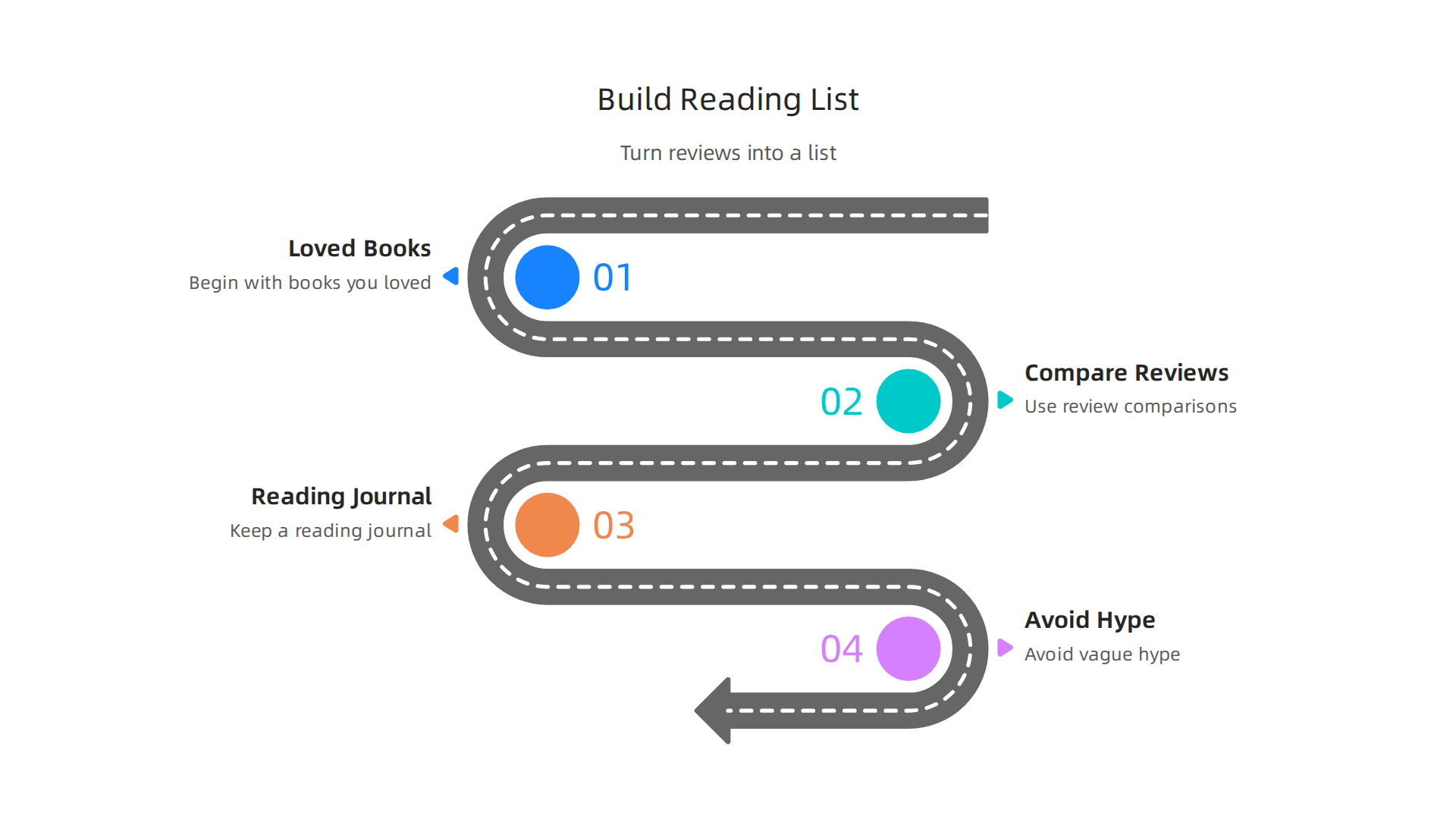
Start with books you already love. The best reviews compare new titles to familiar ones. When you read an oblivion movie review, you learn what makes that story tick. A good book review does the same thing. It says things like "if you enjoyed the time loops in Palm Springs movie, you will love this novel." That comparison gives you instant context. You do not need to guess if the book fits your taste. You already know.
Most readers stick to one subgenre without realizing it. Maybe you lean toward space opera or cyberpunk. But reviews can open doors you did not know existed. A review might compare a slow burn literary sci-fi novel to the slow reveal in the conclave movie. Suddenly that book sounds interesting. Discovery happens when you follow unexpected connections. Use reviews as maps to new territory.
Here is a practical tip. Keep a reading journal. It does not have to be fancy. A simple notebook or a note on your phone works fine. Write down the books you learn about from reviews.
Note why each one caught your eye. Jot down the reviewer’s comparison points. When you finish a book, write a quick reaction. Over time, this journal becomes your personal guide. You will see patterns in what you enjoy. You will also spot the influencer movie review style hype that does not hold up after you read the actual book.
Your journal also helps you avoid bad picks. If a review sounds like vague praise with no details, skip it. If it compares a book to something you already hated, move on. The goal is to build a list that reflects your actual preferences, not someone else’s marketing.
Want a head start on building that list? Browse Rankings and find curated collections that compare directly to the sci-fi you already love.
Summary
This article reviews the 2013 film Oblivion through a book‑lover’s lens, showing how its themes of memory, identity, and a ruined Earth draw from decades of science fiction literature. It covers the film’s critical and audience reception, box office, and why readers notice echoes of Philip K. Dick, Arthur C. Clarke, Stanisław Lem and other giants. The piece then maps those influences onto the movie’s visuals and story beats, compares Oblivion to classic novels, and recommends modern books that capture the same questions. You’ll find five recently reviewed titles that pair well with the film, plus practical advice for turning reviews into a personal reading list. By the end, readers will understand what to watch for in Oblivion and which books to pick up next to explore its core ideas more deeply.