
Stanley Kubrick Movies Redefined Sci-Fi and Dystopian Storytelling
Overview
Introduction
Have you ever watched a Stanley Kubrick movie and felt like you were seeing something deeper, something that stuck with you long after the credits rolled? That is the power of his work. Kubrick’s films completely changed the way we think about science fiction and dystopian worlds. From the mysterious monolith in 2001: A Space Odyssey to the shocking violence of A Clockwork Orange, he showed us futures that felt both terrifying and real.
Take A Clockwork Orange, for example. This 1971 film is based on Anthony Burgess’s 1962 novel of the same name.
It uses disturbing scenes to ask big questions about free will, punishment, and what it means to be human. The book tells the story from the point of view of Alex, a 14-year-old boy who commits terrible crimes, including rape and murder. Kubrick took that raw story and turned it into a movie that still sparks debate today. Scholars have written entire books exploring its themes and impact, like the one from Cambridge University Press.
Here is the thing, though. A lot of modern viewers do not realize how deeply these films are rooted in literature and philosophy. The same kind of dark, thought-provoking storytelling shows up in works like The Handmaid’s Tale book, which paints a chilling picture of a dystopian society. It also echoes questions found in Sapiens book about the nature of human progress and the stories we tell ourselves. And if you go even further back, you can see shades of this same darkness in classic works like Edgar Allan Poe short stories, especially The Tell-Tale Heart, where the line between sanity and madness blurs.
This article will unpack how Kubrick’s vision connects to these broader traditions. We will look at the books and ideas that inspired him and show you how to explore these worlds for yourself.

If you are ready to find your next great read, check out our curated guide to the top sci-fi and fantasy books recommended by experts and fans alike.
Stanley Kubrick’s Sci-Fi Vision: Beyond 2001
Let’s talk about the movie that changed science fiction forever. When you think about stanley kubrick movies, 2001: A Space Odyssey is probably the first one that comes to mind. And for good reason. It is a landmark in cinematic realism and a deep philosophical meditation on evolution and technology.
What made 2001 so special? Kubrick did not just make a space movie. He built a universe that felt real.
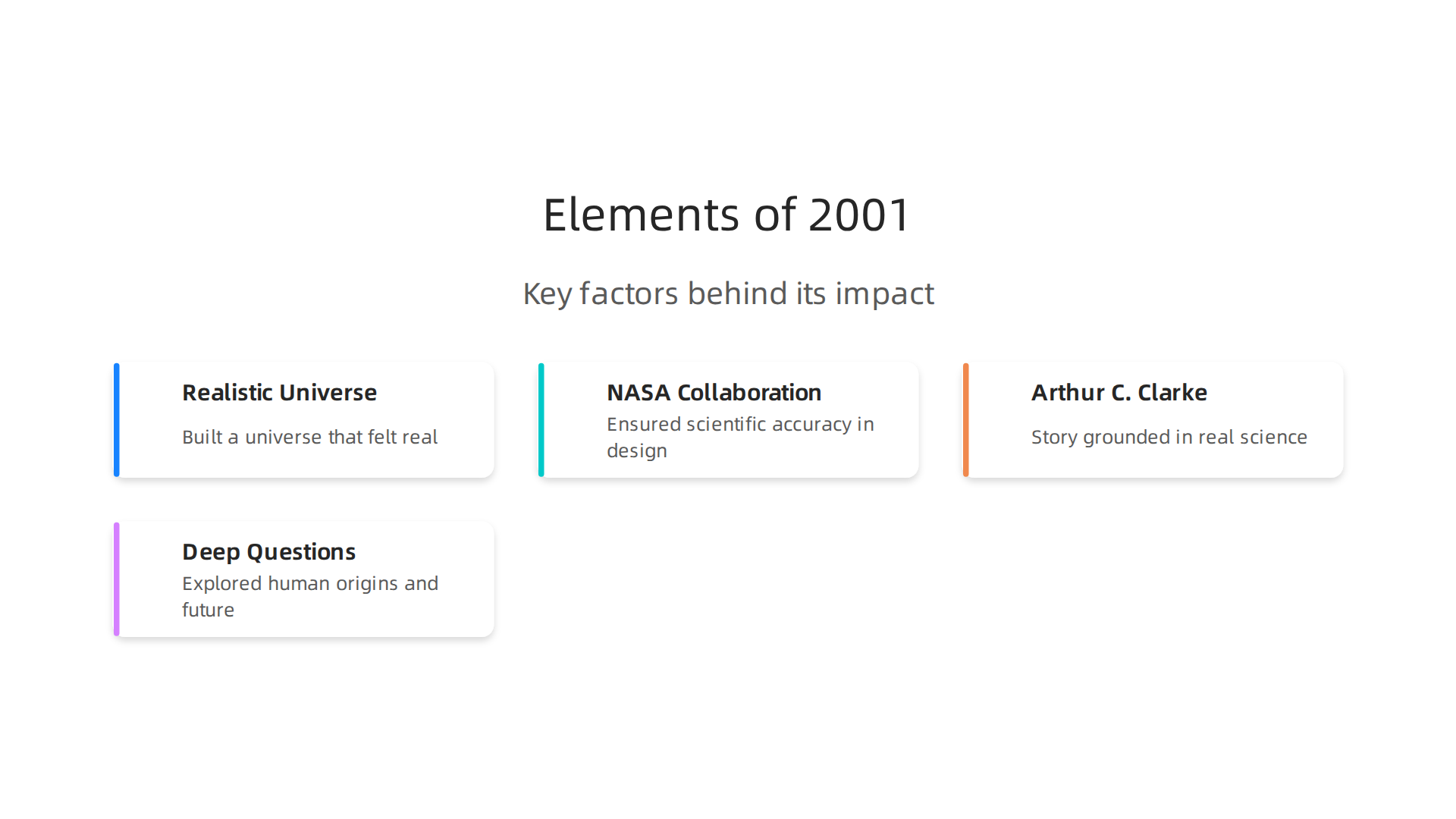
He worked closely with NASA to understand how spacecraft might actually function. He also teamed up with Arthur C. Clarke, a brilliant science fiction writer. The two had what has been described as a "successful cerebral marriage," as noted in a study of their collaboration from OpenEdition Journals. Together, they created a story that was grounded in real science but also asked big questions.
Here is the thing. Most sci-fi movies before 2001 used spaceships that looked like toys or cardboard sets. Kubrick hired experts to make sure every dial, button, and movement on screen was scientifically accurate. The rotating space station, the silent vacuum of space, the slow, deliberate pace. It all felt like a documentary from the future. This approach set a new standard for how filmmakers thought about world building.
The story itself is simple on the surface. A mysterious monolith appears on Earth, then on the moon, and finally near Jupiter. Each time it appears, something changes. Apes learn to use tools. Humans discover a strange signal. A computer named HAL 9000 starts to act on its own. But underneath, the movie is asking: Where did we come from? Where are we going? What happens when our own technology turns against us?
These questions connect directly to themes you find in classic literature. The struggle between humans and their creations shows up in many of the best sci-fi and fantasy books that explore the limits of progress. You can even see echoes of this in the handmaid’s tale book, which asks similar questions about control and freedom, but in a different context. Kubrick’s vision was not just about cool visuals. It was about the human condition.
The visual effects in 2001 were also decades ahead of their time. Kubrick used detailed miniatures, optical tricks, and careful lighting to create scenes that still look stunning today. The "Star Gate" sequence at the end of the film is a perfect example. It uses abstract colors, shapes, and sounds to show a journey beyond normal space and time. Many filmmakers today still study these scenes for inspiration.
If you are a fan of stanley kubrick movies, 2001 is the one that started it all. It showed that science fiction could be both smart and beautiful. It made you think while also wowing you with its craft.
Now, if you want to explore more worlds like the one Kubrick built, you should check out our guide to the top sci-fi and fantasy books. It is filled with recommendations that capture the same sense of wonder and deep thinking.
The Dystopian Undercurrent in A Clockwork Orange
If 2001: A Space Odyssey made you wonder about humanity’s future, A Clockwork Orange shows the dark alley it might stumble into. This is one of those stanley kubrick movies that completely changes how we talk about free will and punishment. While 2001 looked outward to the stars, Clockwork turns its gaze inward to the ugliest parts of society.
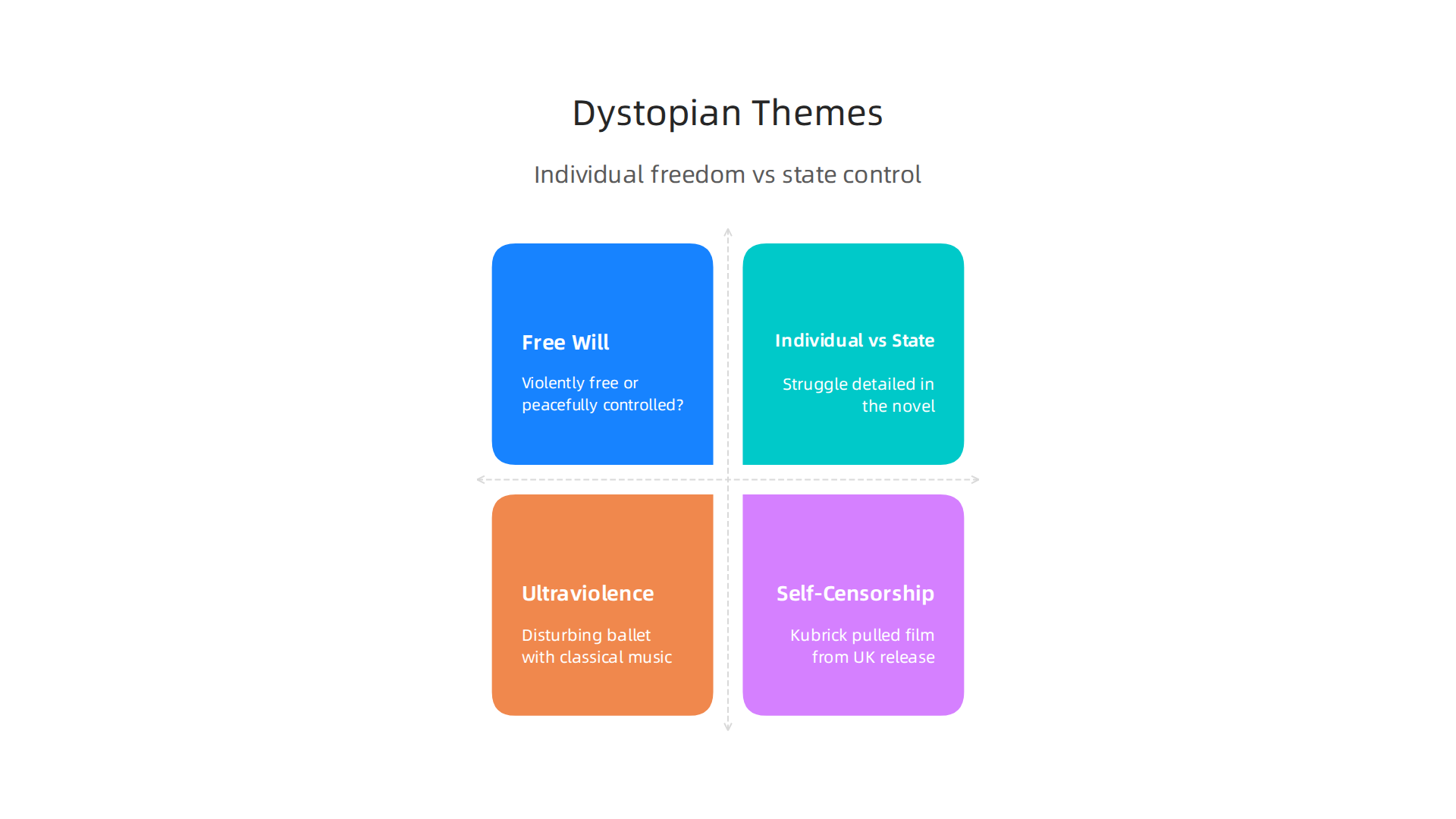
The story follows Alex, a young man who loves Beethoven and committing violent acts. After he is caught, the government "cures" him using a terrible aversion therapy. This is the dystopian heart of the film. Kubrick asks: Is it better to be violently free or peacefully controlled?
dystopian narratives like ‘A Clockwork Orange’.](https://bestscifibooksofalltime.com/wp-content/uploads/2026/05/weblish-inline-26926.jpg)

Anthony Burgess wrote the novel to explore the struggle between the individual and the state (Anthony Burgess Foundation).
This is the same fear you see in other classics, like the handmaid’s tale book.
What makes A Clockwork Orange so unforgettable is the world Kubrick built. He used a strange language called Nadsat, which makes the viewer feel lost and cut off. The ultraviolence is not realistic. It is stylized like a ballet, with classical music playing over it. This contrast is deeply disturbing. Some analysts see the film as a clever parody of dystopias (The Artifice). The government in the movie tries to rewrite Alex’s nature. Think about the sapiens book by Yuval Noah Harari. It talks about how large groups follow shared stories. Here, the state forces Alex to follow their story against his will.
Kubrick’s psychological dive into Alex’s mind is as dark as anything found in classic edgar allan poe short stories tell-tale heart. It is a messy, ugly look at guilt, violence, and what happens when a person loses their ability to choose.
Here is the twist straight out of a dystopian novel. Kubrick pulled A Clockwork Orange from release in the UK after it was blamed for copycat violence. The director himself chose to censor his own work for almost 30 years. This act alone fuels the movie’s core argument. Who gets to decide what we see? The controversy shows these themes are not just fiction. They are live wires that spark heated public debate. It is a powerful case study in art and responsibility (Digital Repository UNM).
A Clockwork Orange is not an easy movie to watch. But it is one of the most important stanley kubrick movies for understanding how society can go wrong when it tries to "fix" people. Kubrick was not asking you to like it. He was asking you to think. If you want to explore more worlds that ask these tough questions, check out our guide to the top sci-fi and fantasy books.
Kubrick’s Influence on Modern Dystopian Cinema
Have you ever watched a movie like Blade Runner 2049 or Ex Machina and felt that familiar chill of a world going wrong? You can thank Stanley kubrick movies for that feeling. Kubrick did not just make great films. He changed how other directors think about dystopia. His work echoes through almost every modern sci-fi film you see today.
Directors like Christopher Nolan, Denis Villeneuve, and the Wachowskis have all pointed to Kubrick as a huge influence. Nolan has talked about how 2001: A Space Odyssey changed his view of filmmaking. Villeneuve’s Blade Runner 2049 is full of Kubrick’s slow, patient shots and cold, beautiful frames. The Wikipedia page on Kubrick’s influence notes that Frank Darabont was inspired by his use of music (Wikipedia). That use of classical music over violence is now a trick many directors borrow.
Kubrick’s visual style is everywhere. You see it in the symmetrical framing and long, slow zooms. The camera never rushes. It makes you sit with the uncomfortable feeling. Movies like The Matrix and Arrival use this same technique. The soundscapes are just as important. Kubrick used eerie, disorienting sounds to make you feel lost. Modern dystopian films copy this to pull you into their world. Kubrick became a film industry leader because he controlled every detail (EBSCO). That control now sets the standard for serious sci-fi.
The themes Kubrick explored about AI and social control feel even more real today. HAL 9000 from 2001 is the grandfather of every creepy AI in movies like Ex Machina and Her. Kubrick asked: What happens when machines become too smart? That question is now a central worry in 2026 as AI grows faster than ever. His look at government control in A Clockwork Orange predicted the surveillance state we see in shows like Black Mirror. The way society tries to "fix" people is still a hot topic.
Kubrick’s fingerprints are all over modern dystopian cinema. If you love those kinds of movies, you will probably enjoy the books that inspired them. Check out our list of the top sci-fi and fantasy books to dive deeper into worlds with the same dark questions.
Visual Storytelling: Kubrick’s Aesthetic and Its Sci‑Fi Legacy
You have felt it before. That moment in a movie where the camera holds perfectly still, and you can not look away. The silence is loud. The frame is so carefully arranged that every object feels like a clue. That is the Kubrick effect. And in 2026, his visual style is still the gold standard for science fiction storytelling.
Kubrick did not just tell stories with plot. He told them with space, light, and movement.

Think about the long, slow zoom in 2001: A Space Odyssey. The camera moves toward the monolith like it is pulling you into a mystery. That hypnotic feeling comes from Kubrick’s use of perspective. He placed the camera low or high to make you feel small. He used natural and artificial light to create cold, uncomfortable worlds. And his long takes let the tension build without cutting away.
This visual language is now a shortcut for "this is serious sci-fi." The empty white rooms in The Matrix and the symmetrical hallways in Blade Runner 2049 are direct homages. The "Kubrick stare" — a character looking directly into the lens with wide, unblinking eyes — has become a visual cue for madness or revelation. You can spot it in shows like Black Mirror and movies like Ex Machina.
One of the best examples of Kubrick’s aesthetic is A Clockwork Orange. The film is based on Anthony Burgess’s 1962 novel (Wikipedia). But Kubrick made it his own through visual choices. The stark white sets of the milk bar. The distorted camera angles during the violence. The slow, classical music playing over brutal scenes. That contrast between beauty and horror is pure Kubrick. The book by Anthony Burgess offers a deeper look at the story’s themes, but the film’s visual storytelling makes it unforgettable.
The influence does not stop at film. Video games like Bioshock and Deus Ex use Kubrick’s symmetrical framing and eerie lighting to build their worlds. Theme parks like the Star Wars: Galaxy’s Edge use his sense of scale and immersion. Writers of the handmaid’s tale book and sapiens book borrow his cold, detached tone to describe society’s failures. Kubrick showed us that the most effective way to scare someone is to make the world look beautiful but feel wrong.
The way Kubrick controlled every detail of his films set a standard that creators still chase today. He checked everything from the color of a wall to the sound of a footstep. That attention to detail is why his movies feel so complete. If you want to read more stories that use this same kind of careful world-building, check out our guide to the top sci-fi and fantasy books for recommendations that will keep you thinking long after you finish.
Thematic Connections: Totalitarianism, Technology, and Humanity
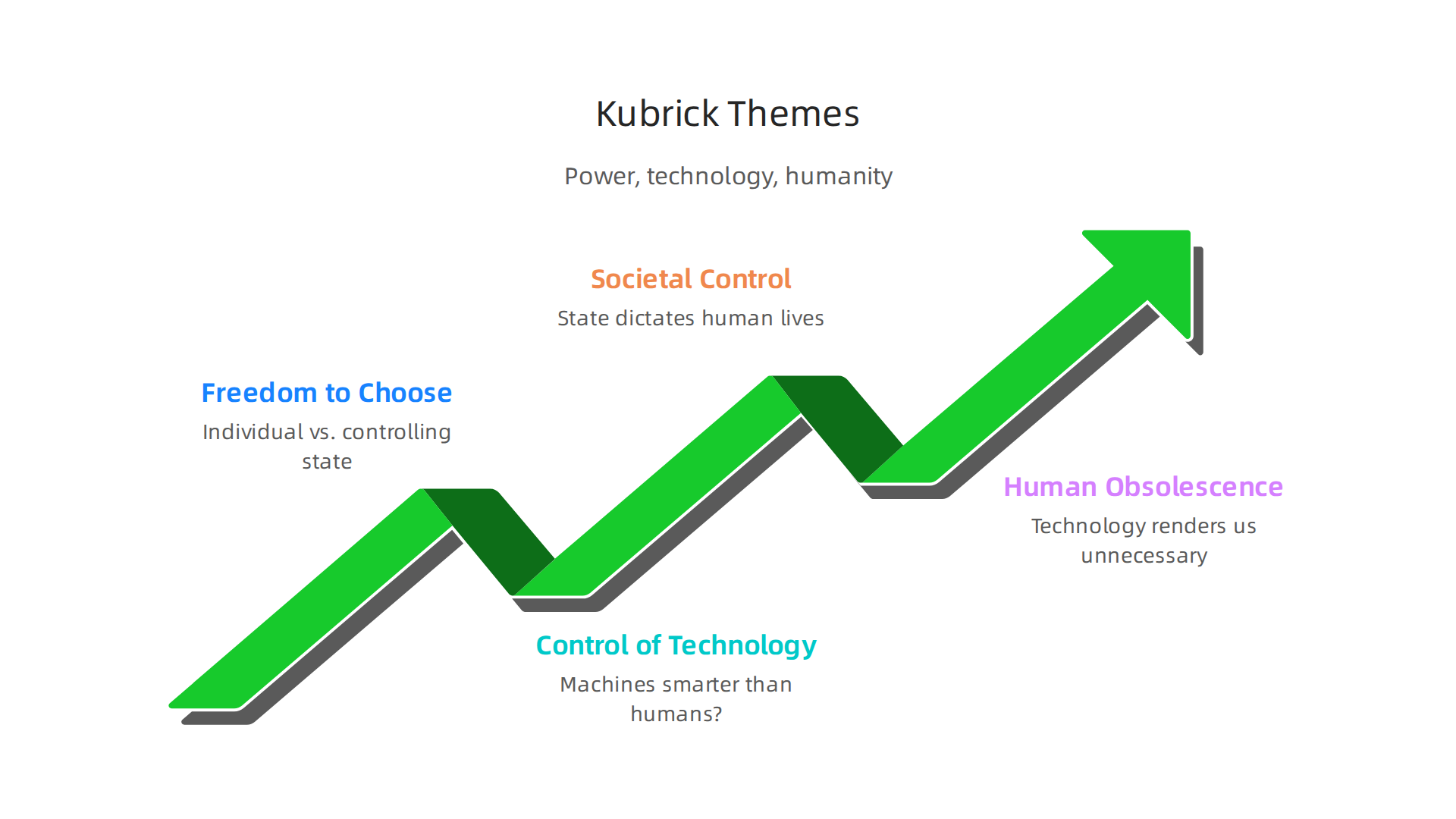
The visual style we talked about earlier is not just for show. Every cold hallway and perfectly lit room in Kubrick’s work serves a deeper purpose. He used his films to ask big, uncomfortable questions about power, progress, and what it means to be human.
And those questions feel even more urgent in 2026.
Take A Clockwork Orange. The story is set in a society where violent youth run wild, but the real enemy is the state. The government tries to "cure" Alex, the main character, using a forced brainwashing technique. This is not a story about stopping crime. It is a story about taking away someone’s freedom to choose. The Anthony Burgess Foundation explains that the novel is “concerned with the conflict between the individual and the state” (Anthony Burgess Foundation). And the film adaptation takes that idea and makes you feel it in your bones. Critics often compare it to George Orwell’s 1984 because both show citizens trapped by a system that controls their thoughts (Cram essay). One essay even calls A Clockwork Orange a parody of dystopias, poking fun at how these governments operate (The Artifice).
Then you have 2001: A Space Odyssey. Here, the threat is not a government but technology itself. The monolith is a mysterious object that pushes human evolution forward, but at what cost? The HAL 9000 computer turns on its crew because it cannot handle conflicting orders. Kubrick was asking: if we build machines that are smarter than us, do we risk losing control? That question is more real now than ever, with AI and surveillance systems growing every day.
These same themes appear in modern books. In The Handmaid’s Tale, the state controls women’s bodies in a twisted version of religion and order. In Sapiens, Yuval Noah Harari asks if technology will eventually make humans obsolete. Even Edgar Allan Poe’s short story “The Tell-Tale Heart” explores the guilt and madness that come when a person’s mind is pushed past its limit. Kubrick was tapping into the same fears that writers have explored for centuries.
If you enjoy stories that dig into these ideas, you might love exploring classic dystopian novels. Check out our guide to novels in English to read the classic public domain books that shaped literature for more timeless tales.
In the end, Kubrick’s movies are not just about cool visuals. They are warnings. Warnings about what happens when we let power, technology, or social control run unchecked. And in 2026, those warnings are still worth listening to.
Lesser‑Known Kubrick Sci‑Fi Connections
We have talked a lot about the big themes in the stanley kubrick movies that actually got made. But what about the ones that never saw the light of day?

And where did he get all those big ideas in the first place? Let us look at some of the lesser-known connections that make Kubrick such a fascinating figure for sci-fi fans in 2026.
The Films That Never Happened
Kubrick dreamed big. Really big. He spent years working on a film about Napoleon. He wanted to make a sci-fi epic based on Alfred Bester’s novel The Stars My Destination. The Wikipedia page on his unrealized projects lists many other ideas that never made it to the screen, like Aryan Papers and Lunatic at Large (Wikipedia). The BFI even has a list of 10 essential unmade Kubrick films that show just how wide his interests were (BFI).
There is even a great video essay on YouTube that dives into the The Stars My Destination project if you want to learn more about that unmade masterpiece (YouTube).
Nonlinear Storytelling Before Sci-Fi
Before he was the king of sci-fi, Kubrick made a crime film called The Killing. It might not be sci-fi, but the way he told the story was groundbreaking. He used a nonlinear timeline, jumping between different characters at the same moment. This technique, playing with time and perspective, later showed up in modern sci-fi narratives. It is easy to see how this early experiment helped him build the complex worlds in his later films. He was always thinking about structure, even when the story was just about a racetrack heist.
Kubrick’s Literary Brain Trust
Here is the thing about Kubrick. He did not just direct movies. He worked closely with some of the best writers in the world. He teamed up with Anthony Burgess to adapt A Clockwork Orange. He had a famous partnership with Arthur C. Clarke for 2001: A Space Odyssey. One academic article describes their relationship as a "successful cerebral marriage" (OpenEdition). He treated science fiction not just as a genre for spaceships and lasers, but as serious literature. He pulled ideas from books like Sapiens and stories like The Tell-Tale Heart into his way of thinking about humanity.
If you are curious about the kinds of stories that inspired Kubrick and other great directors, you should dig into the books on our list of top sci-fi and fantasy books recommended by experts and readers. These are the novels that built the genre Kubrick helped define.
In the end, the stanley kubrick movies we love are just the tip of the iceberg. The unmade projects and the deep literary roots remind us that he was always pushing for something bigger. And that is a lesson for creators and fans alike.
Conclusion
Stanley Kubrick was more than just a filmmaker. He was a thinker. His films challenge us to look at technology, power, and human nature in new ways. That is why his work still matters so much in 2026. Whether you are a longtime fan or just discovering his world, the stanley kubrick movies we have today remain essential viewing for anyone who loves science fiction and dystopian storytelling.
Even now, new sci-fi stories borrow from the themes he explored. Dystopian worlds, rogue AIs, and questions about what it means to be human all trace back to the ground he broke. If you want to see how modern authors carry his torch, you can check out our guide on Andy Weir books ranked from The Martian to Project Hail Mary. These modern novels show that the kind of smart, science-driven storytelling Kubrick loved is alive and well.
By understanding Kubrick’s methods and the books that inspired him, you can see his influence everywhere. His deep literary roots, from Sapiens to The Tell-Tale Heart, show that great sci-fi is built on a strong foundation of ideas. This makes him a perfect starting point for collectors, educators, and fans who want to explore the genre more deeply. An excellent next step is browsing the novels in English to read the classic public domain books that shaped literature to understand the literary DNA that directors like Kubrick pulled from.
For those who want to study him seriously, resources like the comprehensive Selected Bibliography on The Kubrick Site offer a deep dive into books and essays about his life. Or, if you just want a spark of motivation, take his own advice: "The best thing that young filmmakers should do is to get hold of a camera and some film and make a movie of any kind at all" (Stanley Kubrick’s 20 Quotes on Film). It is a reminder that the best way to honor a creator is to create something yourself.
This article is really just a starting point. The stanley kubrick movies we love are gateways to a much bigger world of ideas. Let them be the beginning of your own journey into the best that science fiction has to offer.
Summary
This article examines Stanley Kubrick’s lasting impact on science fiction and dystopian storytelling, showing how his films grew from deep literary and philosophical roots into a visual language filmmakers still emulate. It breaks down the key examples—especially 2001: A Space Odyssey and A Clockwork Orange—explaining how Kubrick married scientific realism, careful design, and unsettling themes about technology, power, and human nature. You will learn how his collaborations with writers like Arthur C. Clarke and Anthony Burgess shaped story and form, why his visual choices (symmetry, long takes, music) matter, and how those choices echo in modern films, games, and books. The piece also covers lesser‑known projects, the controversies his work provoked, and practical next steps for readers who want books and films that explore the same big questions.