
Unlock Engaging Discussions with The Martian Book for Classrooms and Book Clubs
Overview
Why study iconic science fiction novels (and why this list helps)
Have you ever felt lost trying to pick a new book? There are so many great stories out there, especially in science fiction.

It can be tough to know which ones are really worth your time. Finding the best novels to read for students or for a book club can be even harder. You want books that make you think, spark good talks, and maybe even teach you something new.
This is where our guide comes in. We understand that you need clear, helpful suggestions. This list focuses on iconic science fiction novels that are known for more than just a good plot. These are teaching books with deep meanings, interesting history, and lots to talk about. We’ve picked books that have stood the test of time and are great for studying or simply enjoying.
For example, many people love Andy Weir Books Ranked From The Martian to Project Hail Mary, showing how popular stories like the martian book can be. We also look at classics like a wrinkle in time book, which has taught many readers about courage and space. You won’t need a book summarizer for these. We give you all the key details you need to understand why these books are so important. This guide makes finding your next great read simple and fun.
Love Clever Sci-Fi Books? The Ridiculous brings absurd comedy, identity swaps, and perspective shifts.
You can learn more about this unique series at doridiculous.com.
1. Why read and discuss iconic sci‑fi novels?
Picking out a great book is just the first step. The real fun often begins when you talk about it with others. Science fiction novels are especially good for this. They’re not just stories; they’re like special playgrounds for your mind. They let us think about big "what if" questions that don’t have easy answers.

This is why many iconic science fiction books are considered excellent novels to read for students and perfect for book clubs.
When you dive into a science fiction world, you’re doing what we call "thought experiments."
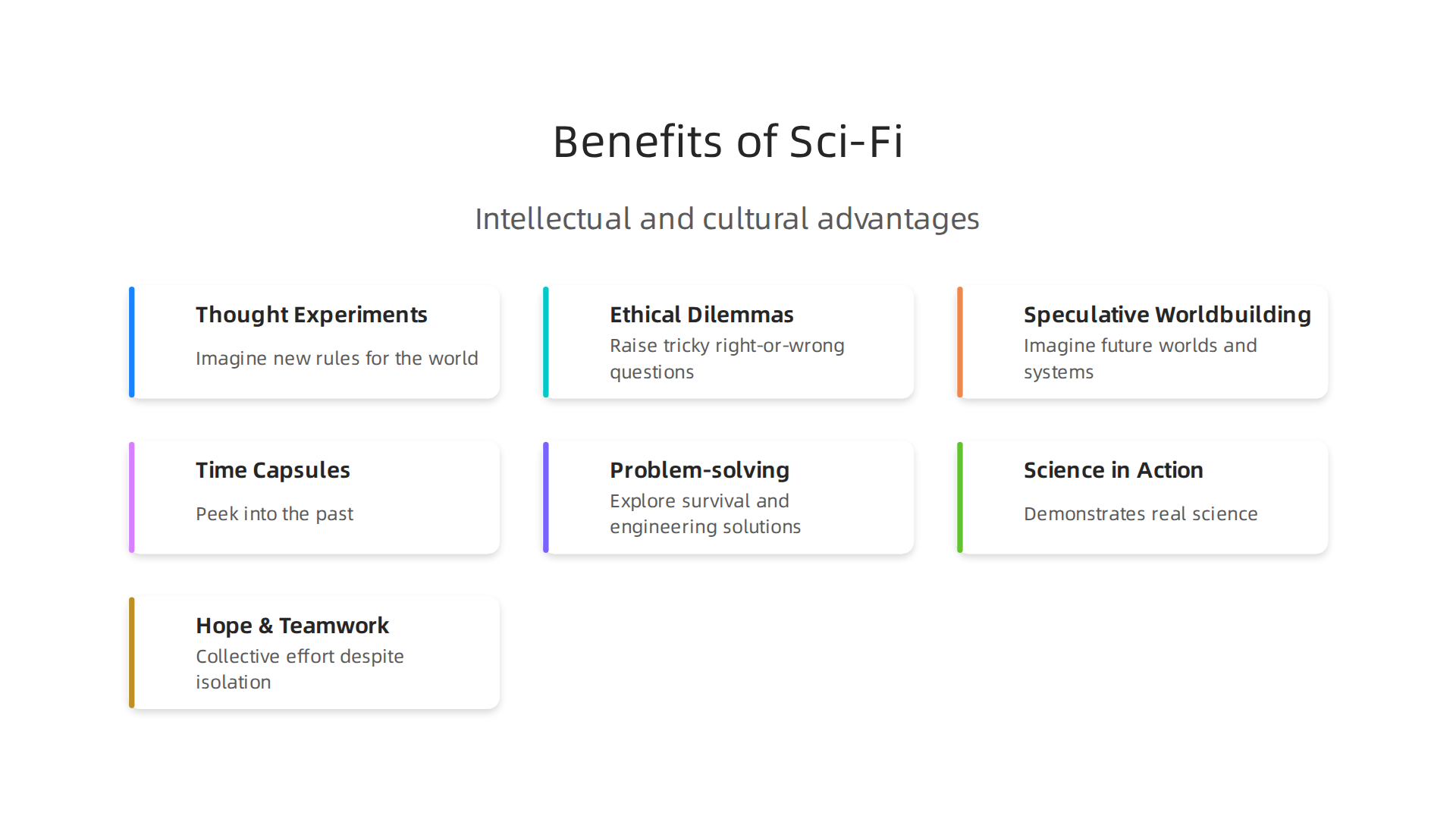
These books ask you to imagine new rules for the world, new kinds of people, or new technologies. For example, a book like The Martian makes you think about how someone would survive all alone on Mars. Or a story like A Wrinkle in Time explores courage and love across different parts of the universe. These stories often bring up tricky questions about right and wrong, known as ethical dilemmas. They invite you to imagine future worlds and how things could be, which is called speculative worldbuilding. Talking about these ideas with friends or classmates can really open your mind. You can find many helpful ideas for these discussions with resources like the Ultimate List of Book Club Discussion Questions.
Iconic science fiction novels also act like time capsules. When you read older classics, you get a peek into the past. You see what people worried about or hoped for when those books were written. For instance, stories written long ago might have ideas about robots or space travel that seem funny to us now, but they show what people imagined at that time. These are truly teaching books because they help us understand how our world and our ideas have changed over time. You won’t need a book summarizer to see the rich layers of meaning in these stories. They make you think deeply about history, culture, and where we might be headed as humans.
If you enjoy thinking about new ideas and what makes a story truly special, you might like books that offer a fresh take on science fiction. Try a new book that sparks both thought and laughter.
Try a New Ridiculous Classic Candidate
2. How to choose novels for classroom study or book-club discussion
After seeing why these stories matter, the next big step is figuring out how to pick the best science fiction novels for your class or book club. Choosing the right book can make a huge difference in how much fun and learning happens. It’s like finding the perfect tool for a job. Here’s a simple checklist to help you choose wisely:
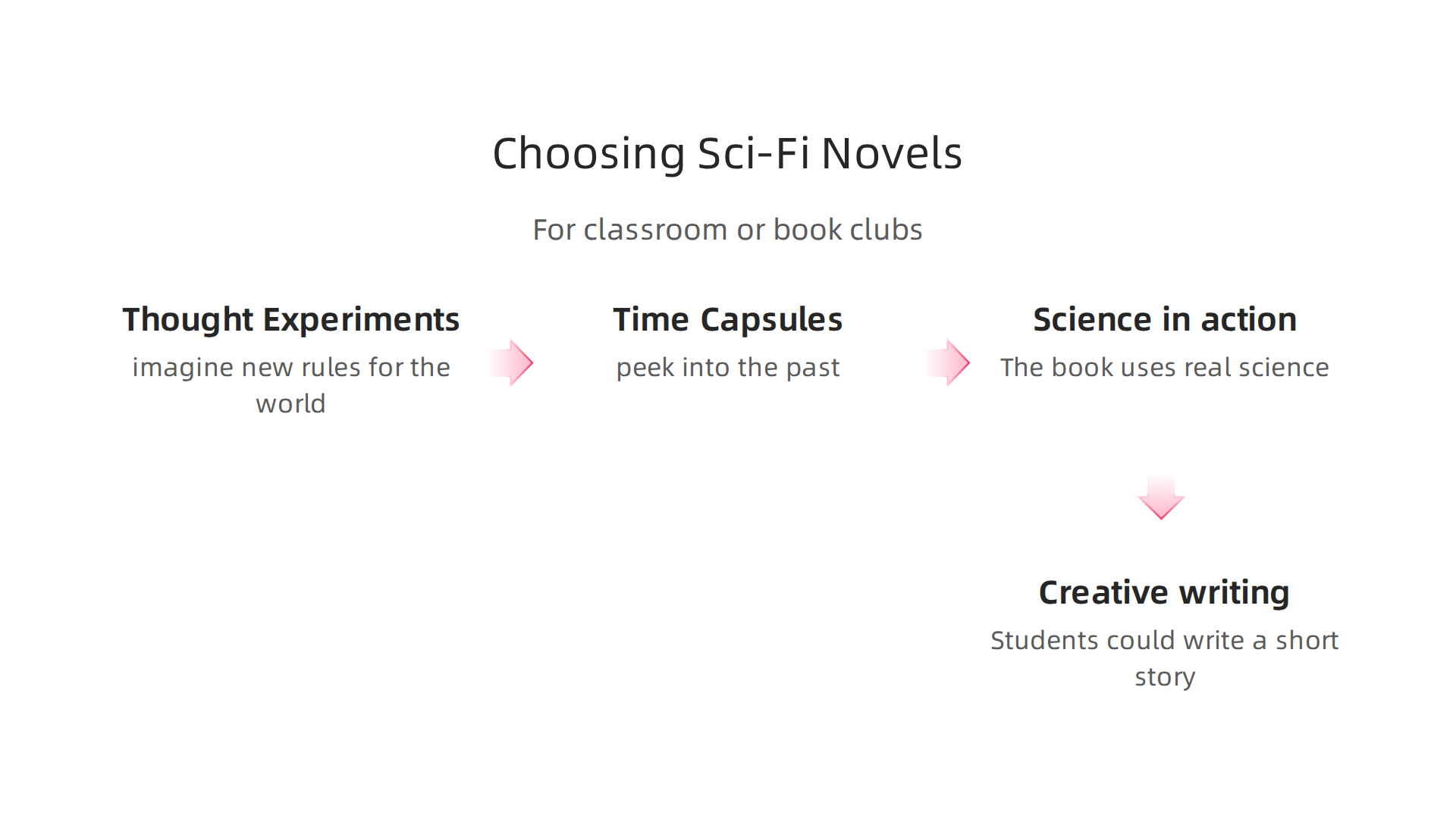
- Interesting Themes: Look for books with big ideas that make people think and talk. Does the story make you wonder about our future, new technologies, or what it means to be human? For instance, a book like the martian book asks deep questions about survival and humanity’s push to explore other worlds, making it a great choice for classroom discussions. As one study highlights, The Martian can wonderfully show "humanity’s desire to explore other worlds" in a science classroom setting using novels in the science classroom.
- Easy to Read: Think about who will be reading the book. Is it for younger students or adults? Pick books that are not too hard or too easy for your group. Some books are known as great novels to read for students because they balance a good story with clear language. Books like A Wrinkle in Time are often picked because they are engaging for many ages.
- Historical Importance: Reading older science fiction can show us how ideas about the future have changed. A book written a long time ago might explore early science fiction ideas, giving readers a peek into history. For example, looking at early science fiction alongside Victorian literature can show how people imagined new worlds back then, as studied in some university English departments in 2026 Duke English Department. Exploring how authors like Burroughs blended genres also shows how science fiction has evolved over time. You can learn more about this by reading How Burroughs Novels Blended Genres.
- Movie or Show Versions: If a book has been made into a movie or TV show, that can add another layer to discussions. You can compare the book to the screen version and talk about what changed and why. Many iconic science fiction stories have become beloved films, offering more ways to engage with the story. Discover more about 10 Best IMDb Popular Sci-Fi Book Adaptations.
- Teaching Helpers: For teachers and book club leaders, it’s helpful if there are guides or questions already made for the book. These can make preparing for discussions much easier. Many universities offer courses that survey influential science fiction novels, showing their value as teaching books.
Mixing and Matching Books
When choosing books, don’t be afraid to mix things up! You can pair older classic science fiction with newer books. This helps readers see how themes have stayed the same or changed over time. For example, if you pick the martian book, you might also look at other Andy Weir books ranked to see his development as an author.
You can also pick books that are at different levels of difficulty. This way, everyone in the group can find something they enjoy and learn from. For example, a global literature survey might contrast old ballads with modern popular novels to see how stories change over time Global Literature Survey. The key is to create a reading list that keeps everyone interested and sparks lots of good talks.
Do you love clever sci-fi stories that make you laugh and think?
Love Clever Sci-Fi Books?
After learning how to pick books based on themes and age groups, let’s talk about some of the special science fiction books that almost everyone agrees are important. These are often called "classics" or "canonical works." They are like the building blocks of science fiction. Choosing these kinds of books for your class or book club means you’ll have lots to talk about.
Why Classic Sci-Fi Matters
Classic science fiction novels are important because they helped create the rules for how science fiction stories are told. They often brought up big ideas for the very first time. Think about stories that asked "What if we could travel to the moon?" or "What if robots became smart?" These books made people wonder and imagine new futures. They are great for discussion because they touch on ideas that are still important today, even if the books were written a long time ago. Many university courses, like those exploring the link between Philosophy and Science Fiction in 2026, focus on how these books imagine our future.
These older books also help us see how ideas have changed over time. When you read a classic from the past, you get a peek into what people thought about science, technology, and society back then. You can talk about what they got right, what they got wrong, and how their visions compare to our world in 2026. This adds many layers to your book club discussions.
Foundational Books to Consider
When looking for classic novels, you might start with authors like Jules Verne or H.G. Wells. Verne’s stories about submarines or trips to the moon sparked imaginations more than a hundred years ago. Wells often explored what new science could mean for people, sometimes in scary ways.
More recent, but still classic, choices include books like A Wrinkle in Time book. This story is a favorite for many students because it mixes adventure with big ideas about good and evil, family, and courage. It’s truly one of the great novels to read for students and has been used as a teaching book for generations. These stories are loved because they help readers think about what it means to be human and what our place is in the universe.
Even newer books, like the martian book, might one day become classics. It tells a great story about survival and smart thinking, which are timeless themes. Looking at how these stories were first received also makes for great discussion. Did people understand the ideas right away? How did critics feel about the book when it first came out?
By adding these foundational stories to your reading list, you make sure your group gets a solid understanding of where science fiction comes from and how it grew. You also get some of the most thought-provoking and discussion-rich stories out there.
If you enjoy smart, funny science fiction stories that also make you think deeply, you might like to Try a New Ridiculous Classic Candidate. This series is built for fans of thoughtful comic science fiction.
Beyond the old favorites, it’s also smart to look at newer science fiction books. These modern stories can really make your book club or class discussions feel fresh and exciting. They show how science fiction keeps growing and changing, often asking new questions about our world in 2026.
Why Modern Must-Reads Matter
Modern science fiction books are super important. They talk about ideas that are very current, like new kinds of technology, space travel we might actually do soon, or big questions about our planet and society. When you read a modern book next to a classic, you can see how far we’ve come. You can compare old ideas to new ones and think about what might happen next. Many college classes, like those that survey world literature, include both older and modern popular novels to show how stories change over time.
These newer books are often easier for many readers to get into because the language is more like what we use today. They also bring up issues that feel very real to us right now. This can lead to very lively talks!
A Great Example: The Martian Book
One excellent example of a modern must-read is the martian book. It tells the exciting story of an astronaut, Mark Watney, who gets left behind on Mars.
He has to use his smarts and scientific knowledge to survive. This book is a fantastic choice for book clubs because it has lots to discuss. For example, you can talk about:
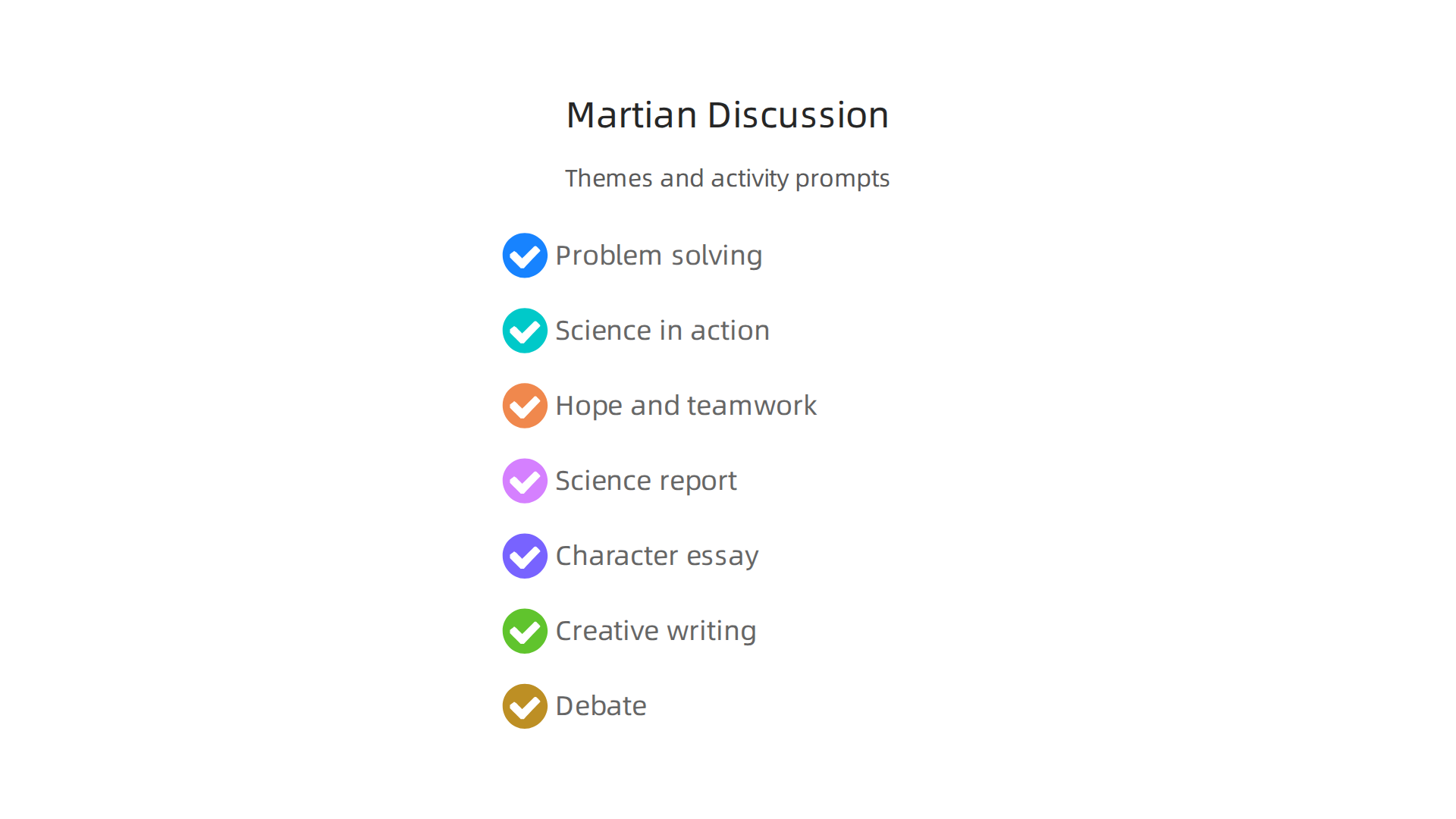
- Problem-solving: How does Mark figure out how to grow food or make water on Mars?
- Science in action: The book uses real science, which makes you think about what it would really take to live on another planet.
- Hope and teamwork: Even though Mark is alone, many people work together to try and save him.
Many groups use resources like The Martian by Andy Weir Book Club Discussion Questions to guide their talks about the story. It’s a great example of science fiction that feels very real and makes you wonder. In fact, if you enjoy all of the stories by its author, you might want to explore a guide that looks at all of the Andy Weir Books Ranked From The Martian To Project Hail Mary.
Reading the martian book alongside a classic like Jules Verne’s From the Earth to the Moon would be amazing. You could talk about how ideas about space travel have changed from the 1800s to today. It shows how even with all the advancements, the human spirit of exploration stays the same.
Modern books, like the martian book, also make great teaching books because they grab students’ attention while still having deep themes about human nature, technology, and survival. They help readers see that science fiction isn’t just about spaceships and aliens, but about people and big ideas. If your group is looking for more ways to understand a story, a book summarizer can help you grasp the main points quickly.
By mixing modern books with classic ones, your reading group will get a full picture of the science fiction world. You’ll see its past, present, and even get hints of its future. Sometimes, modern books can also be very funny while still making you think. You might just like to Found Your Next Sci-Fi Comedy if you are open to something witty and heartfelt.
5. The Martian (book) — context, themes, and why it works in study groups
Let’s dive deeper into why the martian book shines for study groups and classrooms. Beyond just an exciting plot, this novel offers rich themes that make for great conversations. At its core, it’s a story of survival against all odds.

Mark Watney, the main character, faces the ultimate challenge: staying alive alone on Mars. This forces him to become a brilliant problem-solver, using his scientific knowledge in very clever ways. He figures out how to grow food, create water, and even fix parts of his living space using only what’s available.
The book is special because of its focus on realism. Author Andy Weir did a lot of research to make sure the science in the story felt true to life. This means readers aren’t just enjoying a made-up adventure; they’re learning about real scientific principles and engineering ideas. This mix of exciting story and real science makes the martian book a fantastic choice for many kinds of readers. It’s not just for science fiction fans! People who enjoy stories about human spirit, clever thinking, and overcoming huge obstacles will love it too.
For study groups, the martian book provides many discussion hooks. You can talk about what it means to be truly resourceful, or how teamwork and hope can make a difference even when someone is far away. Group members might discuss questions like:
- What makes Mark Watney such a strong character, even when things look bleak?
- How important is scientific accuracy in a science fiction story?
- What lessons about human resilience can we take from Mark’s journey?
There are many resources with specific questions to help guide these discussions, like the detailed The Martian Reading Guide & Discussion Questions. These types of guides help ensure that every member of the group, from casual readers to dedicated students, can contribute to a lively chat.
The story is also quite accessible. Even with its technical details, the language is easy to understand, making it one of the great novels to read for students. It often features Mark’s journal entries, which are full of humor and personality, making the science lessons fun. This helps the book connect with a wide range of ages and reading levels. It’s a wonderful example of a story that can teach you a lot without feeling like a textbook. If you enjoy stories that combine survival and thrilling action, you might also like to explore Sci-Fi Survival Thriller Movies for more options.
The blend of humor, scientific detail, and a gripping plot makes the martian book a modern classic. It shows that science fiction can be both entertaining and deeply thoughtful. It’s a great choice for anyone looking for a book that will spark deep discussions about science, survival, and the amazing power of the human mind.
If you enjoy science fiction that balances serious themes with moments of wit, you might appreciate other works that blend humor with smart storytelling.
Try a New Ridiculous Classic Candidate: Read the series built for fans of thoughtful comic science fiction.
6. Ready-to-use discussion questions and debate prompts
Thinking about the martian book in a study group is a lot of fun. To help make your discussions great, having some questions ready can make a big difference. These questions can be simple for a quick chat or deeper for a long talk.
Here are some ways to think about questions for the martian book:
Questions for Quick Chats
These are good for warm-ups or if you only have a short time to talk. They help everyone share their first thoughts.
- What was the hardest thing Mark Watney had to do on Mars?
- How did you feel about Mark’s chances of survival as you read the story?
- What part of the book made you laugh the most?
- If you were Mark, what one thing would you miss most from Earth?
Questions for Deep Dives
These questions are for when your group wants to really explore the story. They can lead to longer discussions about big ideas in the martian book.
- How accurate do you think the science was in the story? Did it make the story better or harder to read?
- What does Mark’s journey tell us about the human spirit and never giving up?
- Do you think it was right for NASA to risk so much to save just one person?
- How did Mark’s humor help him stay strong? What role does humor play in tough times?
- Compare Mark’s struggle to other survival stories or even how characters face big problems in books like
a wrinkle in time book.
Many guides offer excellent questions to get these conversations started, like those found in The Martian by Andy Weir | Book Club Discussion Questions. These can really help your group dive into the story’s details.
Debate Prompts
For a truly lively session, turn some topics into debates! This gets everyone thinking and sharing different ideas.
- Science vs. Instinct: Did Mark rely more on his science skills or his gut feelings to survive?
- Individual vs. Team: Could Mark have survived without any help from Earth, or was teamwork key?
- The Future of Space Travel: What does
the martian booksay about how we might explore space in the future?
How to Structure Your Study Sessions
Making your discussions flow well is important. Here are some ideas:
- Warm-Up Questions: Start with easy, fun questions to get everyone talking. For instance, "If you could pick one food to grow on Mars, what would it be?"
- Close-Reading Tasks: Pick a specific short part of
the martian bookto read aloud. Then, ask what that part tells you about Mark or the challenges he faces. A quick book summarizer tool can also help everyone recall key moments if needed. - Capstone Debates: End your session with one of the big debate prompts. This is a great way to bring all the ideas together.
These types of structured talks make the martian book one of the best novels to read for students and excellent teaching books for understanding science and problem-solving. If you enjoyed reading about the resourceful main character in the martian book, you might also like to learn more about the author. You can find out more about his other works in our guide to Andy Weir books.
If you love how the martian book mixes smart science with fun adventure, you might like other books that are also very clever. Love Clever Sci-Fi Books?
7. Teaching resources, assignments, and assessment ideas for sci-fi novels
Beyond just discussing the martian book, many teachers and group leaders use it as a powerful tool for learning. This novel, along with others like a wrinkle in time book, serves as fantastic teaching books and novels to read for students.

They help students learn about science, problem-solving, and big ideas in fun ways.
Syllabi and Lesson Ideas
When planning a class, thinking about how the martian book fits into your lessons is key. Teachers often create a syllabus, which is like a map for the course. For science fiction, a syllabus might list the books to read, what topics will be covered, and how students will be graded. Some college English programs even offer full courses focused on science fiction, exploring it as a way to understand culture and myths, as seen in this example for Fantasy and Science Fiction – ENGL 22.
Using novels like the martian book in science classes can really help students learn better. It makes science come alive. Some plans show how teachers can use books to make science topics clearer, helping students understand difficult ideas more easily, as explored in "[PDF] using novels in the science classroom to increase literacy in middle" from Hamline University.
Assignment Prompts
Assignments help students show what they’ve learned from the martian book. Here are some ideas:
- Science Experiment Report: Ask students to pick one of Mark Watney’s problems on Mars, like growing potatoes or fixing the rover. Then, have them research the science behind it and write a report explaining how it works.
- Character Analysis Essay: Students can write an essay about Mark Watney. How did his personality traits, like humor and cleverness, help him survive? What can we learn from him?
- Creative Writing: Imagine you are part of the NASA team trying to save Mark. Write a journal entry or a letter about your feelings and challenges.
- Debate: Set up a debate on topics from the book, like whether it’s right to spend so much money to save one life in space.
When giving assignments, it’s helpful to have a rubric. A rubric is like a checklist that tells students what makes a good assignment and how they will be graded. This makes things fair and clear for everyone. You can find examples of how syllabi, lesson plans, and rubrics are designed to improve science learning strategies in this resource about Understanding the Role of Science-Specific Literacy Strategies in ….
Assessment Ideas
Assessing students means checking how well they understand the book and the lessons it teaches.
- Discussion Grading: Give grades for how well students take part in group discussions. Do they share good ideas? Do they listen to others?
- Project Presentations: If students do a project, have them present it to the class. Grade them on their research, how clear their presentation is, and how they answer questions.
- Quizzes and Tests: Short quizzes can check if students remember key facts and events from
the martian book. Longer tests can ask about bigger themes and ideas.
Cross-Curricular Projects
The martian book is great for projects that mix different school subjects.
- Science and Engineering: Design a tool Mark could have used, or plan a mission to Mars. This links the book to real-world science and engineering. For example, many teachers use science fiction to teach bigger lessons about science itself, helping students to change how they think about the subject, as noted in "[PDF] Changing Perceptions of Science in Undergraduate Students".
- History: Look at the history of space travel and compare it to what happens in
the martian book. - Media Studies: Watch a movie based on a science fiction book. How is it different from the book? Why do you think the filmmakers made those changes? If you love books that become great movies, check out these ideas for sci-fi survival thriller movies that captivate book lovers and movie fans.
Using science fiction, especially stories like the martian book, helps make learning fun and deep. You can find more ideas for teaching sci-fi texts like "Blade Runner" in "[PDF] Blade Runner Redux: Teaching a Sci-Fi Meta-Art Classic". If you’re looking for more great novels in English to read or want to discover the top sci-fi and fantasy books, there are many resources available to guide your choices.
Summary
This article explains why iconic science fiction novels are especially useful for students and book clubs, and gives practical advice for choosing and using them. It covers what makes a novel discussion‑friendly—big ideas, readable language, historical importance, and available teaching resources—and shows how mixing classics with modern titles deepens understanding. The guide uses The Martian as a detailed example, explaining its realistic science, resilient protagonist, and many hooks for classroom debate. You’ll find checklists for selecting books, ready discussion prompts (from quick warmups to structured debates), and ideas for assignments, assessments, and cross‑curricular projects. The piece also highlights the value of film and TV adaptations as conversation starters. After reading, you’ll be able to pick strong sci‑fi texts, run engaging group discussions, and design learning activities that connect literature to real scientific and ethical questions.