The Best Sci Fi Books 1960s Fans Need to Read
Overview
It happens every time. You want to read a classic science fiction book. But where do you even start? A friend recommends Dune. A list online says Neuromancer is a must. Another person swears by The Left Hand of Darkness. The choices pile up fast. It is easy to feel stuck before you even pick up a book.

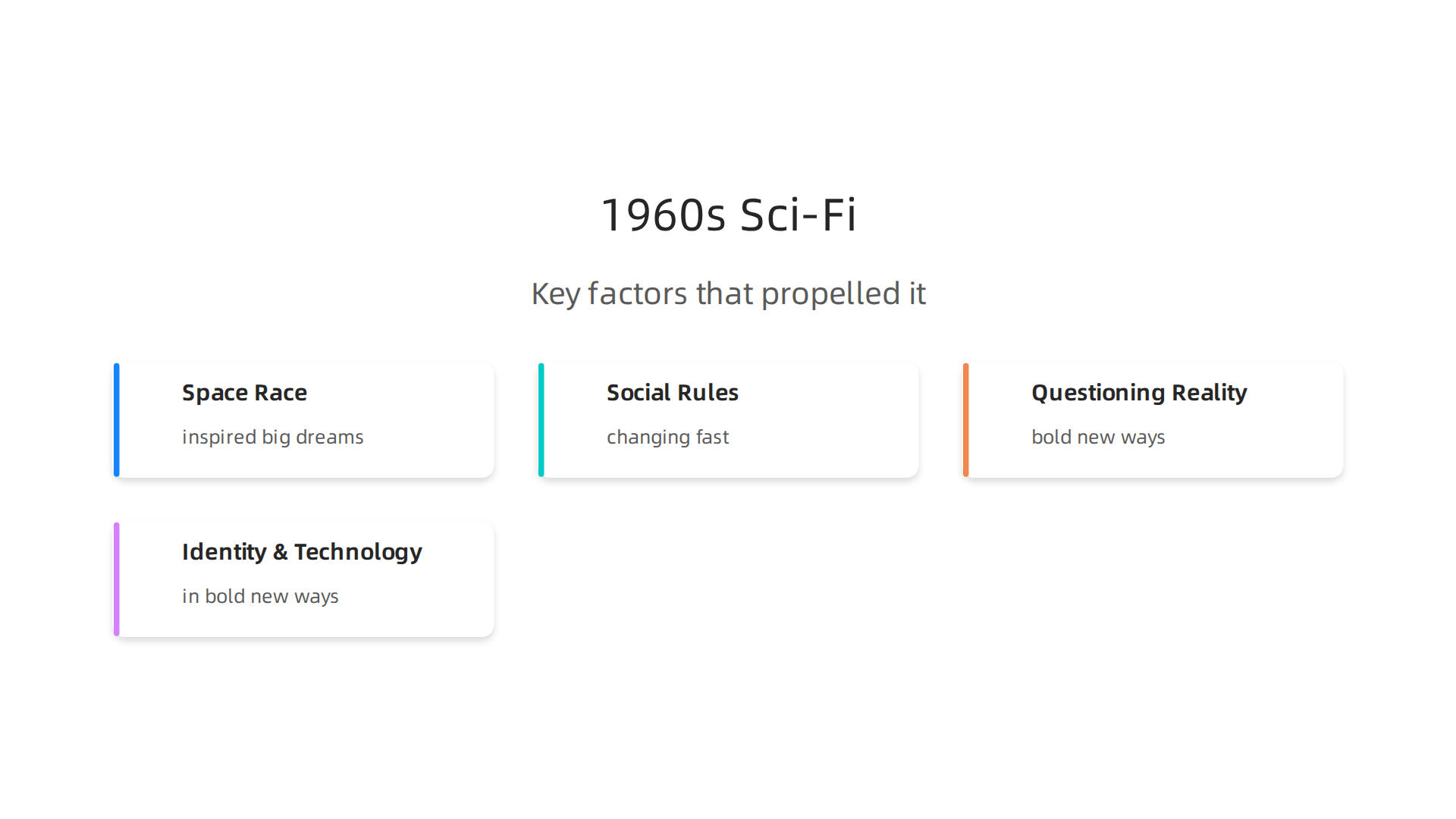
The 1960s produced a remarkable collection of these genre-defining stories. This decade earned its reputation as the golden age of modern sci-fi. Why? The Space Race inspired big dreams. Social rules were changing fast. Authors began questioning reality, identity, and technology in bold new ways.
They wrote books that still shape the movies we watch and the ideas we debate today.
Think about the films you love. As we explored in our guide to how Stanley Kubrick movies redefined sci-fi and dystopian storytelling, the creative risks taken in the 1960s changed everything. Writers like Ursula K. Le Guin, Philip K. Dick, and Frank Herbert asked the tough questions. Their answers became timeless masterpieces.
But finding the right book from this decade can still feel like a hassle. How do you separate the absolute classics from the forgettable titles? How do you know which stories still hold up in 2026?
That is exactly why we created this focused guide to the best sci fi books 1960s fans need to read. We cut through the noise. Every book on this list offers something powerful. A new idea. An unforgettable world. A story that stays with you long after the final page.
Whether you are building a home library, catching up on the genre’s history, or looking for your next book club pick, this list is your perfect starting point. For even more great reads across multiple decades, check out our experts’ picks for the top sci-fi and fantasy books of all time.
The 1960s taught us that the best sci-fi is not just about rockets and the future. It is about understanding who we are right now. Once you dive into these classics, you will see their DNA in every modern story.
Love Clever Sci-Fi Books? If you enjoy stories that twist reality and play with perspective, do not miss The Ridiculous. This modern series brings absurd comedy, identity swaps, and fresh depth to the genre. Check it out here.
1. Dune (1965) – Frank Herbert
You have probably heard of Dune. It is the kind of book that shows up on every list of best sci fi books 1960s must reads. But here is the thing: many people feel intimidated by its size. They hear about sandworms, spice, and complex politics. They worry it will be too hard to follow.
Do not let that stop you. Dune earned its reputation for good reason. Frank Herbert built a world so detailed it feels real. He wove ideas about ecology, religion, and power into a story that keeps you turning pages. The desert planet of Arrakis is not just a setting. It is a character. Every grain of sand matters.
Herbert’s masterpiece won both the Hugo Award and the Nebula Award in the same year. That is rare. It is one of only a handful of novels to achieve that double honor. You can see the full list of these award winners for yourself.
The influence of Dune is everywhere. You see it in movies like Star Wars. You hear its echoes in political debates about resource control. Even the word “spice” carries new meaning after you read this book. It is a novel that keeps growing more relevant with each passing decade.
If you are serious about exploring the best sci-fi books 1960s, start here. Dune will reward your patience with a story that changes how you think about our own world.
Ready for a different kind of classic? If you love the worldbuilding in Dune but want a story with humor and a modern twist, check out the Ridiculous series. It is built for fans of thoughtful comic science fiction. Read the series here.

2. The Left Hand of Darkness (1969) – Ursula K. Le Guin
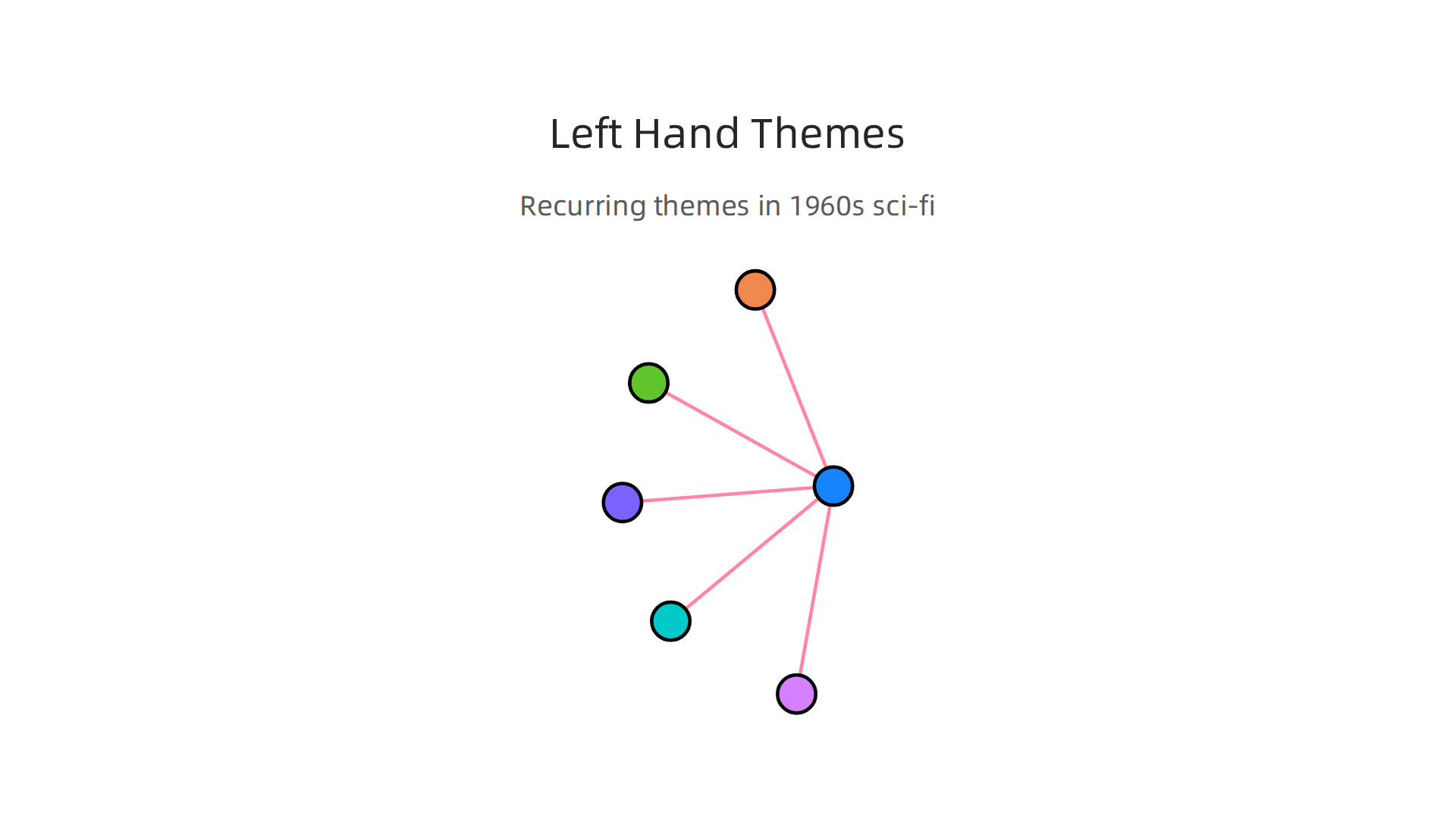
What if people had no fixed gender? That is the question at the heart of The Left Hand of Darkness. Ursula K. Le Guin created a world where humans are both male and female at different times.
And trust me, that changes everything.
Published in 1969, this novel did something daring. It used science fiction to explore gender in ways that few books had tried before. Le Guin built a planet called Gethen where the people are normally androgynous. They only take on male or female traits during a short mating period. The story follows Genly Ai, a human man from Earth, as he tries to understand this strange society.
The book did more than just tell a good story. It opened up real conversations about identity and inclusivity. Scholars still study how Le Guin handled gender in this novel. One article notes that her work had a significant impact on current gender discourse. That is a big deal for a book written over fifty years ago.
Le Guin used an anthropological style. She showed you the culture of Gethen through everyday details. You learn about their politics, their myths, and their way of seeing the world. It feels like reading a field report from another planet. That approach influenced a whole generation of writers who came after her.
If you want to understand why people still talk about the best sci fi books 1960s, this is a must-read. It is a book that changed how we think about identity. And it fits perfectly alongside other groundbreaking works like the Dune series we talked about earlier.
Love thought-provoking sci-fi? The Left Hand of Darkness will stretch your mind. For more clever reads packed with identity shifts and big ideas, check out the Ridiculous series. Explore the Ridiculous series here.
3. Do Androids Dream of Electric Sheep? (1968) – Philip K. Dick
From Le Guin’s exploration of gender, we move to another big question. What does it really mean to be human? That is the heart of Do Androids Dream of Electric Sheep? by Philip K. Dick.

This novel takes place in a ruined future after a global war. Most animals are extinct. People live in dusty apartment blocks and check their mood on a device called a mood organ. The main character, Rick Deckard, is a bounty hunter who tracks down androids that have escaped to Earth. These androids look and act just like people. The only way to tell them apart is through a deep empathy test.
Dick wrote stories where reality was always slippery. He loved plots where you could not trust what you saw. One analysis of his work explains that only Dick could write a story where androids are common, but the real question is whether humans are any different. That is what makes this book so powerful.
The novel later inspired the iconic movie Blade Runner. But the book is much deeper than the film. It asks tough questions about compassion and what makes a life valuable. In 2026, as we argue about AI and machine rights, these questions feel more urgent than ever.
If you love stories that mess with your head and make you think, this is one of the best sci fi books 1960s. It fits right alongside other mind-bending works. For more on how sci-fi translates to the screen, check out this look at movie adaptations like Oblivion.
Ready for a story that questions everything? Do Androids Dream of Electric Sheep? will leave you thinking long after the last page. For another clever read with heart and humor, start the Ridiculous series here.
4. Ubik (1969) – Philip K. Dick
If you thought Do Androids Dream of Electric Sheep? was strange, wait until you pick up Ubik. This 1969 novel takes Philip K. Dick’s love for bending reality and cranks it to eleven. The story follows Joe Chip, a technician who works in a world where dead people can be kept in a kind of frozen "half-life." But soon, reality starts falling apart. Memories change. Time slips. And a mysterious product called Ubik seems to be the only thing holding everything together. Or is it?
Dick wrote stories where you could never trust what you saw. As one analysis of his work explains, only Dick could create plots where androids are common, but the real question is whether humans are any different. In Ubik, the question is even bigger. Are you alive or dead? Is this real or a dream? The novel messes with your head from start to finish.
This book is often called one of the most mind-bending works of the 1960s, and for good reason. Its innovative narrative structure has inspired countless writers and even game designers. The way it plays with time and identity feels fresh even in 2026.
If you want to explore more incredible stories from the same era, check out this curated list of the top sci-fi and fantasy books recommended by experts and readers.
Ready for something that will make you question everything? Ubik is a must-read among the best sci fi books 1960s. But after all that reality bending, you might want a laugh. If so, start a modern absurd SF adventure with wit and heart.
5. The Moon Is a Harsh Mistress (1966) – Robert A. Heinlein
After all that reality bending, let’s shift to something with a sharper political edge. The Moon Is a Harsh Mistress is one of the most famous libertarian science fiction novels ever written. It won the Hugo Award in 1967 and still sparks debate in 2026.
The story takes place on a lunar colony where prisoners and their descendants live under strict Earth control. The people of the Moon have had enough. They stage a revolution. And they get help from an unexpected ally, a sentient computer named Mike who develops a sense of humor.
Heinlein explores themes of revolution and self-government with a witty narrative voice that keeps the political ideas from feeling dry. As one detailed appreciation of the novel explains, it popularized the famous libertarian slogan TANSTAAFL, which stands for "There Ain’t No Such Thing As A Free Lunch." The book is an overt attempt to reimagine society through voluntary association and free-market economics.
The sentient computer was way ahead of its time. In the 1960s, most people had never even seen a real computer. Yet Heinlein imagined one that could joke, learn, and help run a revolution. That is one reason this novel feels so fresh even decades later.
This political allegory remains a touchstone for discussions about freedom and technology. It is a must-have on any list of the best sci fi books 1960s. If you want to find more incredible stories from this era, check out this curated list of the top sci-fi and fantasy books recommended by experts and readers.
Love clever sci-fi books that challenge your thinking? The Moon Is a Harsh Mistress delivers big ideas with a wink. And if you enjoy stories with wit and perspective shifts, you might love The Ridiculous, a series that brings absurd comedy and heart to science fiction.
6. Stranger in a Strange Land (1961) – Robert A. Heinlein
Now let’s jump to another Heinlein novel that took a very different path. While The Moon Is a Harsh Mistress dealt with politics and revolutions, Stranger in a Strange Land went straight for culture and religion. This book became a kind of bible for the 1960s youth movement. It won the Hugo Award in 1962 and has never stopped stirring up conversation.
The story follows Valentine Michael Smith, a human raised by Martians who comes to Earth with a completely alien perspective. He does not understand our customs around love, death, money, or faith. His innocent questions reveal how strange and often broken our own society can be. Heinlein uses him to explore free love, organized religion, and the limits of tolerance.
What makes this book still matter in 2026 is how boldly it challenges the reader. As Wikipedia notes, the novel became a cultural touchstone for the counterculture, introducing concepts like "grokking" into everyday language.
It is not just a story. It is an invitation to question everything you think is normal.
For anyone looking at the best sci fi books 1960s, this novel is essential. It shows that science fiction can do more than predict technology. It can change how we see each other. If you want to explore more works that bend your worldview, take a look at this list of the top sci-fi and fantasy books recommended by experts and readers.
Love science fiction that makes you rethink your own world? Stranger in a Strange Land does exactly that with warmth and sharp satire. And if you enjoy thoughtful, funny sci-fi that blends big ideas with heart, you might enjoy The Ridiculous series, a modern take on absurd comedy and deep questions in outer space.
7. A Canticle for Leibowitz (1960) – Walter M. Miller Jr.
Now, let’s turn to a book with a much darker view of the future. While Heinlein asked us to question society, A Canticle for Leibowitz asks if we ever truly learn from our mistakes. This post-apocalyptic masterpiece won the Hugo Award in 1961 and has become a set text in many literature courses. It is that rare novel that blends deep religious questions with hard science speculation.
The story takes place centuries after a nuclear war has destroyed civilization. A small group of monks works to preserve the last scraps of human knowledge. They copy old documents by hand, not really understanding what they mean. Over three sections, spanning thousands of years, the book shows history repeating itself. It asks a painful question: will humanity ever escape its own cycle of destruction?
What makes this novel stand out in any list of the best sci fi books 1960s is its hypnotic tone and unique structure. As described on Goodreads, it captures the reader with a "captivating post-apocalyptic tale" set in a world that feels both ancient and familiar.

It is not a fast action story. It is a slow, thoughtful reflection on faith, science, and the stubbornness of human nature.
For anyone studying best sci-fi books 1960s, this is a must-read. It forces you to think about how progress and destruction are often the same coin. If this kind of deep worldbuilding fascinates you, you may enjoy our guide to the top sci-fi and fantasy books recommended by experts and readers.
Ready for more thought provoking science fiction? If you like novels that mix grand ideas with human warmth, you might enjoy The Ridiculous series, a modern take on big questions wrapped in surprising humor.
8. The Left Hand of Darkness (1969) – Ursula K. Le Guin
Now, let’s shift from the cycle of destruction to a completely new way of seeing the world. While Canticle asked if we learn from history, Ursula K. Le Guin asked something even deeper in her 1969 masterpiece. She asked us to rethink what it really means to be male or female.
This book won both the Hugo and Nebula awards. It is a cornerstone of any list of the best sci fi books 1960s because it dared to explore a world without fixed gender. The story follows Genly Ai, an envoy from Earth to the frozen planet Gethen. The people there are ambisexual. They do not permanently exist as male or female. This one change creates a society that challenges every assumption we hold about identity, power, and love.
The novel sparked huge debates that still matter in 2026. As The Paris Review noted, Le Guin’s choice to use "he" as a pronoun for the Gethenians "undercuts the idea that they’re supposed to be neither male nor female." Scholars like Arin Dahl writing for CSU East Bay also pointed out that in this world, "there are no distinctions of men being strong, active, and aggressive while women are weak, passive, and nurturing." It imagines a truly whole person.
For anyone serious about the best-sci fi books 1960s, this is essential reading. It expands what the genre can talk about. The harsh winter world forces the people to rely on each other in ways that blur the lines we take for granted.
If this kind of bold worldbuilding fascinates you, you can find more essential reads in our guide to the top sci-fi and fantasy books recommended by experts and readers.
Challenge your perspective further. If big, thoughtful ideas are your kind of science fiction, you should also check out a modern take on the genre. Start a modern absurd SF adventure with wit and heart.
9. Flowers for Algernon (1966) – Daniel Keyes
From questioning gender, we now turn to questioning intelligence itself. In 1966, Daniel Keyes published a novel that would become one of the most heartbreaking and thought‑provoking entries in any list of the best sci fi books 1960s. Flowers for Algernon won both the Hugo and Nebula Awards, and it remains a staple in classrooms across the country.
The story follows Charlie Gordon, a man with an intellectual disability who volunteers for a risky experimental surgery. He hopes it will make him smarter. The whole book is told through his personal progress reports. As his IQ skyrockets, Charlie becomes a genius. But he also begins to understand how people treated him before. He sees the cruelty, the pity, and the loneliness he never noticed. And then, just as quickly, his intelligence starts to fade.
What makes this book so powerful is the way it forces us to look at how we treat people with cognitive differences. The narrative structure lets us live inside Charlie’s changing mind. We feel his joy, his anger, and finally his fear of losing everything. The novel touches on major ethical questions about human experimentation and animal research, as noted by the Rutgers community. It is also widely taught in schools. In fact, the Louisiana Department of Education includes it in grade 8 companion resources for students with significant cognitive disabilities.
This is not a story about cool gadgets or space battles. It is a story about what makes us human. If you are looking for the best sci fi books 1960s that will leave you thinking long after the last page, this belongs on your shelf. For more essential reads from this era and beyond, check out our guide to the top sci-fi and fantasy books recommended by experts and readers.
After a story this heavy, sometimes you need a lighter break. If you want a clever sci‑fi book with absurd comedy and identity swaps, take a look at The Ridiculous. It is a perfect palate cleanser that still plays with big ideas.
10. A Clockwork Orange (1962) – Anthony Burgess
If you thought Flowers for Algernon was tough, get ready for another book that asks uncomfortable questions. A Clockwork Orange by Anthony Burgess is a dystopian novel that has sparked debate for decades. It explores free will, violence, and what happens when the state tries to force people to be good.
The story follows Alex, a teenager who leads a gang through a series of brutal acts. Burgess invented a slang called Nadsat that mixes Russian with English. At first it feels strange, but soon you start to understand it. That language trick pulls you right into Alex’s world. After he gets caught, he volunteers for an experimental treatment that conditions him to feel sick at the thought of violence. But is he truly good if he no longer has a choice?
This question about free will versus forced morality is at the heart of the novel. And the controversy around it has never faded. In 2025, the American Library Association named it the eighth most challenged book in the United States, as the Wikipedia entry for the novel notes. The book has faced repeated bans because of its sexual violence, according to the Banned Books Project at Carnegie Mellon University. In fact, an article on Open Culture reported that it was the most banned book of the 2024-2025 school year.
That controversy proves how much power the story still holds. It is not an easy read. But it is one of the most important examples of the best sci fi books 1960s because it makes you think about the difference between being good and being forced to act good.
If you want to learn how the film adaptation changed the book’s legacy, check out our guide on how Stanley Kubrick movies redefined sci‑fi and dystopian storytelling.
After a book this dark, you might need something funny. Try The Ridiculous, a sci‑fi comedy that will make you laugh without losing the big ideas.
11. Comparing the Classics: Awards, Influence, and Legacy
So after walking through all these groundbreaking stories, you might wonder: which ones really stand out? Let’s put these books side by side. This quick comparison shows you the awards, the lasting impact, and why each one matters. It is a handy guide for book clubs, collectors, or anyone who wants to know what to read next.
The 1960s produced some incredible sci-fi, and the numbers prove it. Several novels from this decade won the highest honors in the genre. For example, Dune by Frank Herbert won both the Hugo Award and the Nebula Award.
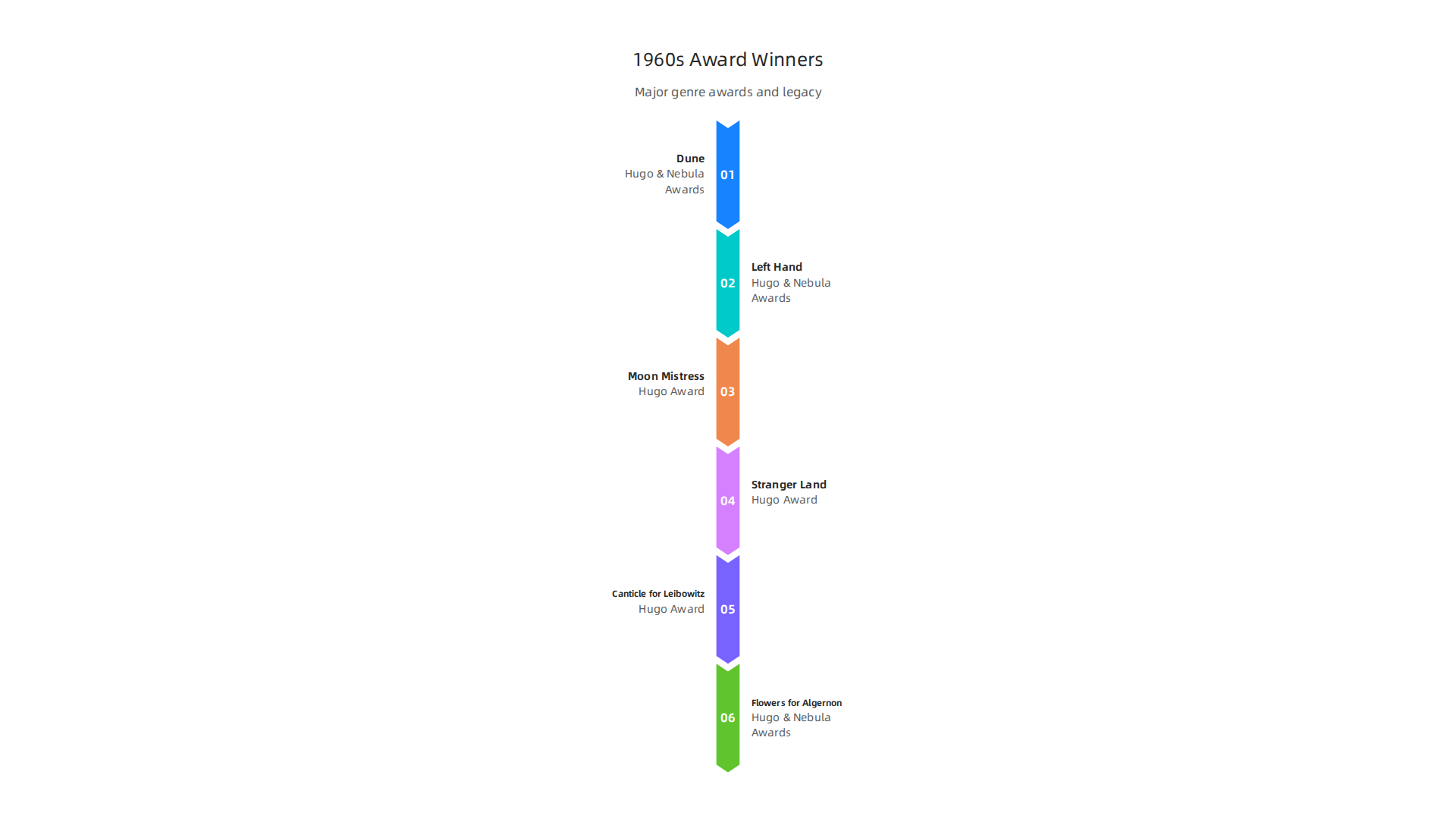
So did The Left Hand of Darkness by Ursula K. Le Guin. These two books are among only 26 novels in history to pull off that double win. You can see the full list of these top achievers on a Wikipedia resource that tracks all the joint winners.
But awards are just one way to measure influence. These books changed how we think about politics, gender, and what it means to be human. They inspired movies, video games, and even real world technology. If you want to see how one author’s work shaped film, check out our guide on how Stanley Kubrick movies redefined sci fi and dystopian storytelling.
The best sci fi books 1960s share one thing: they still matter today. Whether you are starting your collection or just looking for your next great read, these classics set the bar.

If you enjoyed exploring these heavy hitters, you might want something lighter next. Try a new Ridiculous classic candidate. Read the series built for fans of thoughtful comic science fiction. It keeps the big ideas but adds plenty of laughs.
Summary
This article is a curated guide to the best science fiction books of the 1960s, explaining why this decade produced so many genre‑defining works and which titles still matter in 2026. It profiles classics like Dune, The Left Hand of Darkness, Do Androids Dream of Electric Sheep?, Ubik, The Moon Is a Harsh Mistress, Stranger in a Strange Land, A Canticle for Leibowitz, Flowers for Algernon, and A Clockwork Orange, highlighting their core questions about power, identity, technology, and human nature. The piece shows which novels won major awards, how they influenced film and culture, and why their themes remain urgent now. Readers will learn which books are best entry points, what ideas each novel explores, and how to connect these reads to modern adaptations and further recommendations. The guide also points to resources for movie‑book comparisons and ways to find editions or related modern titles for lighter or deeper followups.