
Why Something Wicked This Way Comes Book Endures as a Dark Fantasy Classic
Overview
Introduction: The Enduring Magic of a Dark Fantasy Classic
You might think you know what to expect from a book called Something Wicked This Way Comes. A creepy carnival. A dark night. Two boys who get in over their heads. And sure, that is all there. But Ray Bradbury’s 1962 novel is so much more than a simple horror story.
For over six decades, this book has pulled readers in with its haunting poetry and its tender coming-of-age heart.
It tells the story of two young friends, Will Holloway and Jim Nightshade, who live in the quiet town of Green Town, Illinois. Bradbury based this town on his own birthplace of Waukegan, a place he described as a small, sleepy burg outside of Chicago. When a mysterious carnival rolls into town one October night, the boys find themselves facing their deepest fears and desires.
Here is the thing. Many people pick up something wicked this way comes book expecting nothing more than a spooky thrill. But if that is all you see, you miss the rich layers underneath. Bradbury was weaving a story about growing up, about the battle between light and dark inside each of us, and about the price of getting what you wish for.
Bradbury’s own life fed this story. He once met a carnival performer named Mr. Electrico as a child, and that encounter helped spark his imagination. That real world inspiration gave the novel a grounded story that feels personal and true, even when the events turn strange and surreal.
So why does this book still matter in 2026? Because the fears of two boys facing a dark carnival are really our own fears about time, loss, and change. The carnival does not just show up in Green Town. It shows up wherever people feel their youth slipping away.
This deep dive will walk you through the novel’s origins, its hidden meanings, and its lasting power. By the end, you will see this classic in a whole new light. And if you love stories that blend big ideas with deep heart, you might also enjoy discovering more clever sci-fi books that surprise you.

The Genesis of a Dark Fantasy Classic: Bradbury’s Inspiration and Writing Process
You already know that a childhood meeting with a carnival showman named Mr. Electrico planted a seed in young Ray Bradbury. But that encounter did more than just spark his imagination. The performer pointed at Bradbury and said, "Live forever." Those two words became a lifelong mission. Bradbury later said that moment is what made him decide to become a writer. Mental Floss explains how this real-life carnival moment directly inspired the book.

Here is the thing. Bradbury did not sit down and write Something Wicked This Way Comes from scratch. The novel grew out of an earlier short story called "The Black Ferris."

He also had a screenplay bouncing around in his head. For years, the story refused to leave him alone. He kept tinkering with the idea of a carnival that preyed on people’s secret wishes. Eventually, he turned that old short story into a full-length novel. The final version finally came together in 1962, dedicated to actor Gene Kelly. The SparkNotes background piece notes that Bradbury wrote a brief afterword explaining the dedication.
Bradbury’s influences for this book ran deep. He loved the dark, brooding atmosphere of Edgar Allan Poe. He admired the way Charles Dickens created vivid, unforgettable characters. And he soaked up the American Gothic tradition, which is all about strange things hiding in ordinary small towns. You can see all three of those voices in the way Green Town feels both cozy and creepy at the same time. Bradbury himself pointed to H.P. Lovecraft as a key role model for this kind of horror story.
The writing process itself was intense. Bradbury poured his own childhood fears of carnivals and his love of autumn nights into every page. He called Green Town a "small, unimportant, quiet burg," which directly matched his own memories of Waukegan, Illinois. Goodreads describes Green Town exactly as Bradbury remembered it. That grounded story is what makes the fantasy feel so real. You believe a dark carnival could roll into your own town.
If you enjoy learning how classic stories come to life, you might also like exploring other novels that grew from their authors’ real-world roots.
Key Themes: Good vs. Evil and the Loss of Innocence
At its heart, the something wicked this way comes book is a battle between light and dark. But it is not a simple fairy tale where the good guys are perfect and the bad guys wear black hats.
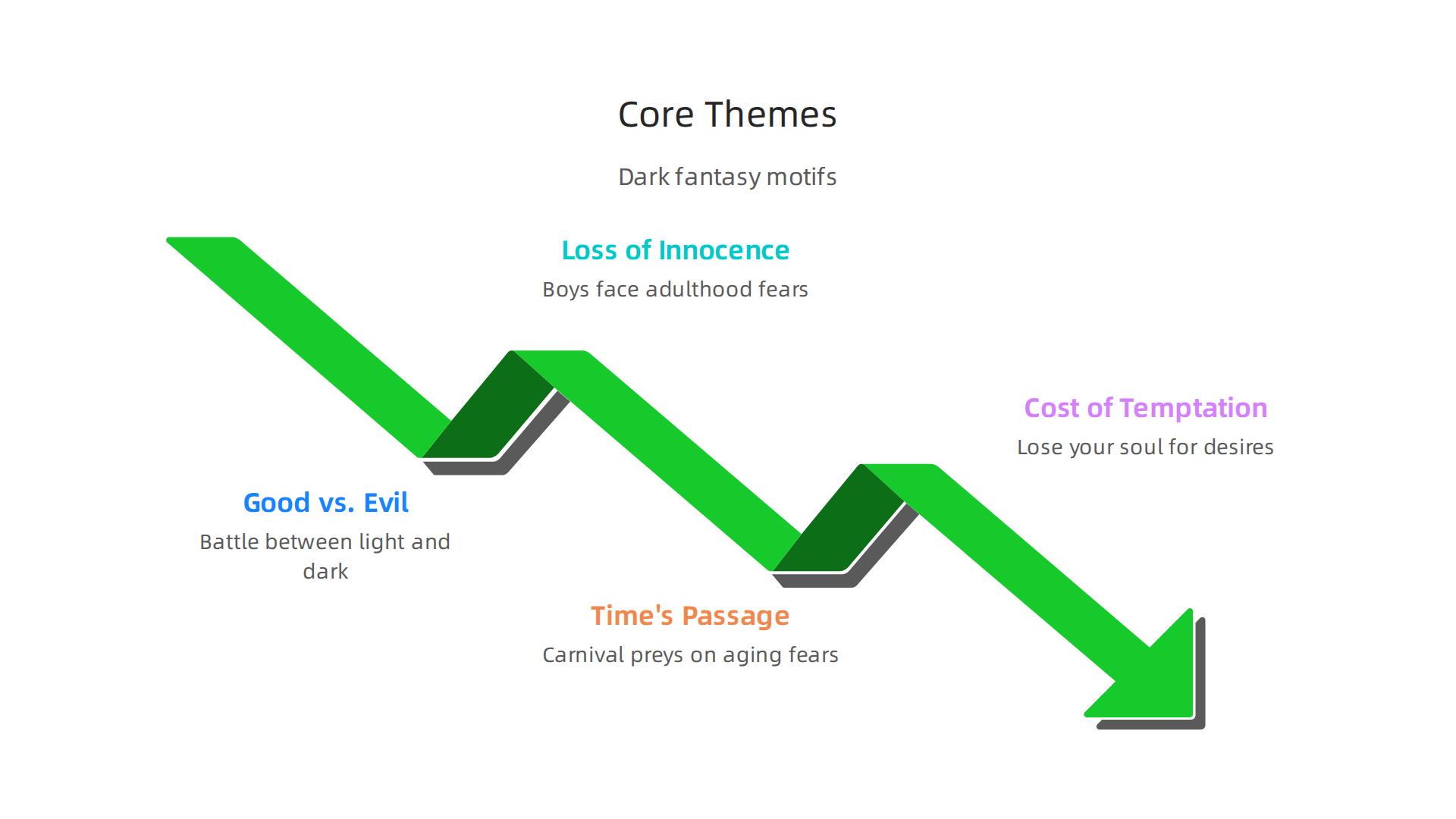
Bradbury makes the conflict feel real and personal. The carnival feeds on people’s secret desires. If you are lonely or scared of getting old, the carnival offers you what you want. The only catch is that you lose your soul in the deal. That is the evil the town must face. Study.com notes that the novel focuses on the forces of good and evil, plus the cost of giving in to temptation.
The two main characters, Will Halloway and Jim Nightshade, show us two very different ways to handle growing up.

Will is cautious and steady. Jim is restless and hungry for excitement. LitCharts points out that even Will, who is basically good, still faces chances to be bad. That is what makes these stories character feel so real. They are not perfect heroes. They are two boys standing at the edge of adulthood, each scared of what they might lose. One is afraid of growing up too fast. The other is afraid of staying young forever.
Time itself is a huge force in the story. The carnival tricks people into thinking they can escape aging. SparkNotes explains that the carnival preys on people who feel isolated and think no one understands their fears. But Bradbury shows that the real answer to fear is not running from age. It is facing it with the people you love. Ploughshares describes how the two boys must choose between good and evil. That choice is what defines them as they lose their innocence.
This grounded story feels so powerful because these themes are universal. Everyone has felt the pull of something tempting. Everyone has worried about getting older. The GradeSaver page lists coming of age and fear of death as central themes.

Bradbury wraps these heavy ideas in a story about a carnival, which makes them easier to digest. You can enjoy the ride while also thinking about what it really means to grow up.
If you enjoy books that blend deep themes with thrilling plots, you might also like exploring other novels from the 1960s that redefined science fiction.
The Carnival as a Metaphor for Temptation and Time
Think about the last time you saw an ad that promised you something amazing with almost no effort. Maybe it was a pill that helped you lose weight fast. Or a course that claimed you could get rich in a week. You probably knew it was too good to be true. But for a split second, you wondered: what if it actually worked?
That pull is exactly what the carnival uses on the people of Green Town. The something wicked this way comes book turns the carnival into a living metaphor for every shortcut we have ever been tempted to take.
The carnival offers shortcuts to your deepest desires, but it always demands a terrible price.
SparkNotes explains that the carnival preys on people who feel alone and believe no one understands their fears. That is the scariest part. It does not attack the strong and happy. It targets the weak spots we all carry inside. Study.com confirms that the story focuses on the cost of giving in to temptation. You get what you want, but you lose who you are.
Carny’s coercive tactics mirror real-world predation in a terrifying way.
Think about how a manipulative person works in real life. They find out what you want most. Then they dangle it in front of you. They make you think it is your only option. The carnival does the same thing. GradeSaver highlights that the carnival feeds on people’s secret desires. It knows you are scared of getting old. It knows you feel lonely. And it uses that knowledge like a weapon. This makes the story feel like a grounded story even though it has supernatural elements. The danger feels real because the tactics are real.
The ticking clock motif emphasizes the relentless passage of time.
Bradbury never lets us forget that time is running out. Every moment the boys hesitate, the carnival grows stronger. Every second they waste, someone else falls under its spell. The carnival does not give you forever to decide. That is the point. Life does not either. The GradeSaver page lists fear of death as a central theme in the novel. The carnival exploits that fear by offering you a chance to stop time. But stopping time is really just giving up on living.
The most powerful lesson here is simple. Real happiness never comes from a shortcut. It comes from facing your fears, growing older, and leaning on the people who love you. That is a truth this stories character book teaches better than almost any other.
If these deep themes appeal to you, you will love exploring how other classic novels from the 1960s tackled similar ideas about time and human nature.
Character Analysis: Will Halloway, Jim Nightshade, and the Dark Man
If you have ever watched a friend make a risky choice you knew would end badly, you already understand the pull between Will Halloway and Jim Nightshade.
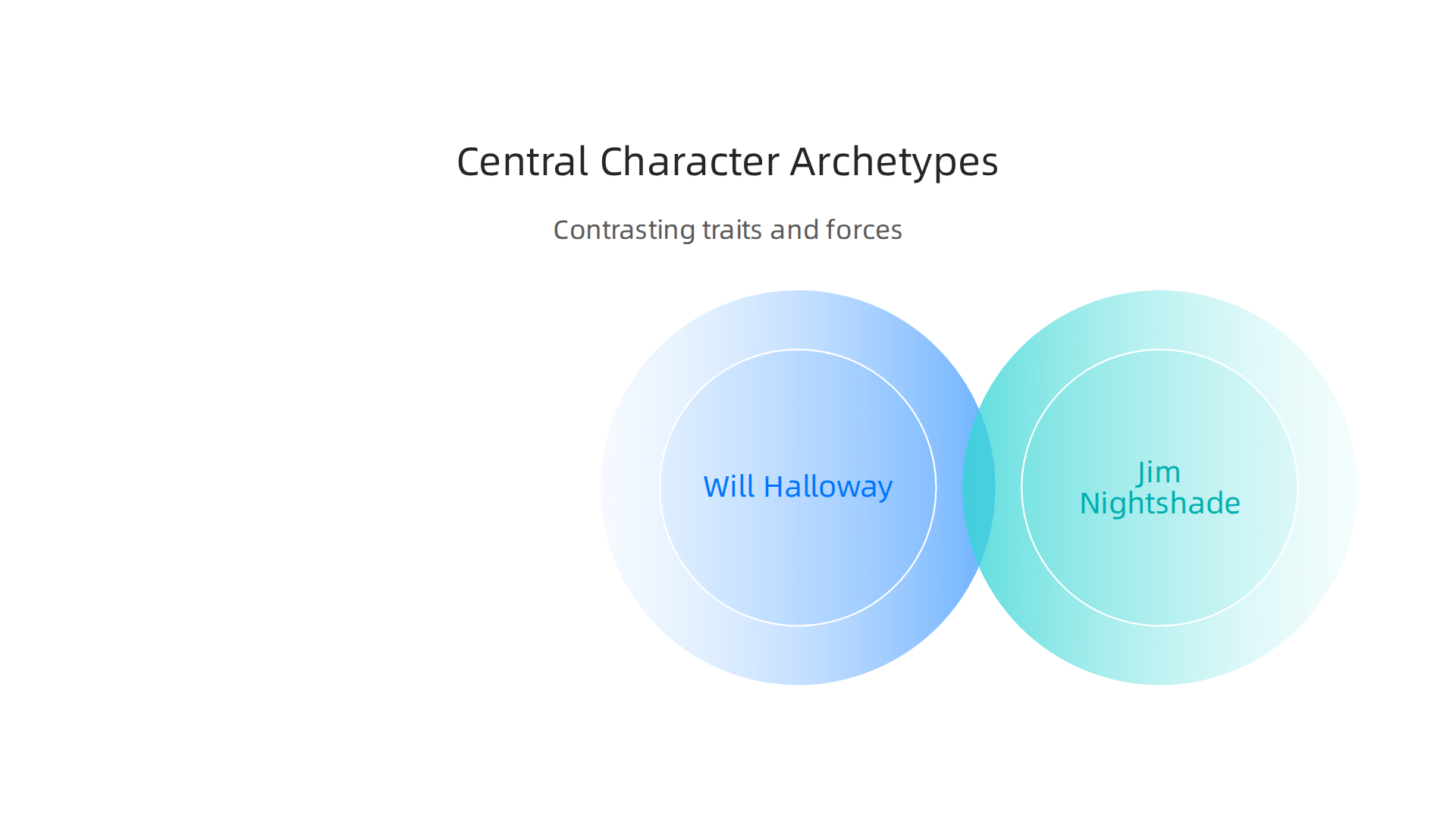
These two boys are more than best friends. They are opposites who balance each other out. And that balance is exactly what the carnival tries to break.
Will Halloway represents cautious loyalty and quiet inner strength.
Will is the boy who thinks before he acts. He has white-blond hair and a careful nature. He feels fear, but he does not let it control him. LitCharts describes Will as the personification of good throughout the novel. He is not perfect. He gets scared. But he stays loyal to Jim no matter what. When the carnival tempts people with their deepest wishes, Will holds on to what really matters: his friendship and his sense of right and wrong. EBSCO notes that the novel explores the interplay of youth, friendship, and the nature of evil through its major characters. Will is the anchor that keeps Jim from drifting away completely.
Jim Nightshade’s yearning for adventure makes him vulnerable.
Jim is the opposite of Will in almost every way. He has dark, wild hair and an impatient heart. He wants to grow up fast. He wants excitement. And he wants it now. The Yellowed and Creased blog explains that Jim is the dark and adventurous youth, wanting to grow up quicker to do interesting things. That hunger makes him the perfect target for Mr. Dark. Course Hero confirms that Mr. Dark first targets Jim because his impulsive nature and longing for adulthood make him vulnerable. Jim does not pause like Will. He leaps. And sometimes he lands right in the trap.
Mr. Dark, the Illustrated Man, embodies pure malevolence and temptation.
If Will is the good heart and Jim is the restless soul, Mr. Dark is the poison that tries to destroy them both. LitCharts calls Mr. Dark the personification of evil within the novel. He does not need to force anyone to give in. He just shows them what they want most and waits. His body is covered in tattoos that shift and move. Each one tells the story of someone he has already claimed. He is patient. He is cunning. And he never stops hunting.
The real lesson of these characters is simple. Will and Jim need each other to survive. Will keeps Jim from running off a cliff. And Jim keeps Will from being too afraid to live. Together, they face the darkness. And that is what the something wicked this way comes book teaches us best: you do not fight evil alone. You fight it with the people who love you.
If you enjoy character-driven stories that explore these deep ideas, you might also enjoy our list of the best sci-fi books from the 1960s, which feature similar themes of temptation, time, and human nature.
Literary Style: Bradbury’s Prose and Use of Symbolism
Bradbury’s writing style is as unforgettable as the story itself. He writes in a way that feels like poetry, not just sentences on a page. Every word seems chosen for its sound and feeling. That is what makes the something wicked this way comes book so different from other dark novels. It mixes beauty with fear.
Bradbury’s prose creates both wonder and dread at the same time.
His sentences are long and flowing. He uses vivid images that stick in your mind. When he describes the carnival, you can almost smell the popcorn and hear the calliope music. But underneath that joy, there is a chill. You know something is wrong. The Yellowed and Creased blog captures this well, noting that the novel’s power comes from the contrast between childhood innocence and the darkness lurking just out of sight. Bradbury does not tell you to be scared. He makes you feel it in your bones.
Recurring symbols give the story deeper meaning.
Bradbury fills the book with objects that mean more than they seem. Mirrors appear often. They reflect what people truly want, not what they show the world. Dust is another symbol. It represents aging and decay. The carnival uses dust to remind people that time is running out. Lightning rods are a symbol of protection and foresight. Will’s father Charles Halloway keeps books, and those books stand for knowledge and resistance. In a world of lies and tricks, reading the truth becomes a powerful act. These symbols tie the stories character arcs together, making every scene feel layered.
The story structure alternates between slow dread and sudden action.
Bradbury builds tension gradually. He spends pages describing a quiet night or a long conversation. But then something explodes into motion, like the carnival parade or the chase through the mirror maze. This rhythm keeps you on edge. You never know when the next burst of terror will come. It mirrors the experience of the boys themselves: long stretches of doubt and fear, followed by moments of desperate action.
If you appreciate how classic authors use language to create atmosphere, you might also enjoy our guide to classic novels in English that shaped literature. And if you are looking for a modern sci-fi story that blends wit and heart with its own unique style, start a modern absurd SF adventure with wit and heart.
Adaptations and Interpretations: From Film to Stage
The most famous version of this tale is the 1983 Disney film. But the movie is quite different from the something wicked this way comes book. Both capture Bradbury’s love of autumn and the magic of carnivals. But the film changes a lot. Director Jack Clayton had a different vision than Bradbury. The author wanted to keep the moral ambiguity of his novel. But Clayton chose to tone things down for a younger audience.
Key differences between book and film.
The Dust Witch offers a clear example. In the novel, she is a mummified, ugly creature. In the film, she becomes a beautiful young woman. The ending also changes. The movie wraps things up more neatly with a hopeful tone. The book leaves you with more to think about. Many readers agree the novel is darker and more powerful. The characters feel deeper. The terror feels more real. It is a more grounded story with higher stakes. The book simply has more emotional weight. Unlike some other book adaptations that stay close to the source, this one takes many creative liberties. The 1983 version has gained a cult following, but most fans admit it does not fully capture the novel’s power.
Bradbury himself wrote a stage play.
In the 1990s, Bradbury adapted his own novel for the stage. This version brings the story back to its roots. It focuses on dialogue and the core conflict without special effects getting in the way. Radio dramas have also brought the story to life over the years. These audio versions let you hear Bradbury’s poetic language without visual distractions. You can focus purely on the words and the mood.
The story lives on in other forms.
A graphic novel adaptation tries to capture both the visual beauty and the dark heart of the book. Some critics and fans have called for a modern reboot. They want a version that stays true to the novel’s deeper themes. The stories character arcs deserve a faithful adaptation. A new version could use modern effects while keeping the book’s soul intact.
If you enjoy seeing how great books get adapted for the screen, you might like our list of the 10 best sci-fi book adaptations.

The Book’s Place in Bradbury’s Oeuvre
Have you ever wondered how one author could write so many different kinds of stories? Ray Bradbury did exactly that. He gave us Fahrenheit 451, a fiery tale about censorship. He gave us The Martian Chronicles, a poetic look at colonizing space. And he gave us the something wicked this way comes book, a dark story about a carnival that preys on human weakness.
Each book feels different. But they all share Bradbury’s deep love for people.
How this novel compares to Bradbury’s other classics.
Fahrenheit 451 is fast and urgent. It warns us about losing our humanity to screens and control. The Martian Chronicles is slower and more dreamlike. It explores loneliness and hope on a new planet. But Something Wicked This Way Comes sits right in the middle. It is both a thrill ride and a quiet meditation on growing up.
The story is more personal than his other works. Bradbury considered it one of his most personal novels. He poured his own childhood fears and memories into it. The small town of Green Town, Illinois, is based on his own hometown of Waukegan. The two boys, Will and Jim, feel like real kids you might have known.
Recurring themes that tie everything together.
Bradbury often wrote about technology taking over our lives. In Fahrenheit 451, it is the wall-sized TVs and the mechanical hound. In The Martian Chronicles, it is the rockets that bring both wonder and destruction. In the something wicked this way comes book, the threat is not a machine. It is the carnival itself. But the carnival uses tricks and illusions that feel almost technological. Mr. Dark and his freaks offer people what they think they want. They prey on loneliness, regret, and hidden desires.
Memory is another big theme for Bradbury. He believed our past shapes who we are. In this novel, the characters must face their own memories. They must accept their regrets or be destroyed by them. The carnival does not just scare people. It reminds them of what they have lost.
Bradbury also cared deeply about humanity. His stories always ask the same question: What does it mean to be human? In Fahrenheit 451, the answer is about thinking freely. In The Martian Chronicles, it is about adapting to change. In Something Wicked, it is about staying true to yourself even when fear tries to change you.
Why this book stands out in his career.
This novel is Bradbury at his most grounded. The horror feels real because the characters feel real. The stakes are high but personal. It is not about saving the whole world. It is about saving one friendship and one small town.
If you are new to Bradbury, this is a great place to start. It has everything he does well: beautiful language, deep themes, and a story that stays with you. And if you want to explore more classic science fiction from that era, check out our guide to the best sci-fi books of the 1960s fans need to read.
The something wicked this way comes book proves Bradbury could write more than just warnings about the future. He could write about the present. He could write about you and me. And he could make us look in the mirror.
If you want a lighter, funnier take on speculative fiction after this dark journey, try a new ridiculous classic candidate. It is built for fans of thoughtful comic science fiction and might give you a good laugh after all that terror.
Why This Novel Endures: Timeless Relevance and Reader Appeal
Some books fade away. Others stick around for decades. Why does a story written in 1962 still feel fresh in 2026?

It is because the something wicked this way comes book touches on things that never change. Growing up. Facing temptation. Finding courage when you are scared.
Themes that hit close to home.
Everyone has faced a moment where they had to choose between what is easy and what is right. Bradbury understood this deeply. One reader pointed out that the novel suggests "regret, disappointment, loss, and even misbehavior are the conduits for compassion." That is a powerful idea. The characters do not win because they are perfect. They win because they are human.
The two boys, Will and Jim, show us what it means to grow up. They face real fear. They make mistakes. And they learn that bravery is not about being fearless. It is about moving forward anyway. That is a grounded story that speaks to readers of any age.
How the novel keeps finding new readers.
Teachers still assign this book in classrooms. Book clubs still debate its meaning. Parents pass it down to their kids. Why? Because the lessons in the something wicked this way comes book do not get old. The carnival is a metaphor for all the temptations we face today. The pressure to be younger. The desire to escape our problems. The fear of getting older.
Stephen King, one of the most famous horror writers alive, called this novel Bradbury’s finest work. That is high praise. And it is proof that even the best storytellers look to Bradbury for inspiration.
A story that shaped modern dark fantasy.
Many contemporary authors in the dark fantasy genre name this novel as a major influence. Its mark shows up in their characters, their settings, and their themes. The idea of a carnival that preys on human weakness has been copied many times. But Bradbury did it first, and he did it best.
If you want more stories that mix dark ideas with real heart, you might enjoy The Ridiculous. It brings absurd comedy, identity swaps, and fresh perspective shifts. It is built for readers who love smart, human science fiction with a sense of humor.
Summary
Ray Bradbury’s Something Wicked This Way Comes blends dark fantasy, poetry, and coming-of-age drama in a story about two boys in small-town America who confront a sinister carnival that preys on secret desires. This article traces the novel’s genesis in Bradbury’s childhood encounters and earlier stories, explains the book’s central themes—temptation, the passage of time, and loss of innocence—and analyzes its key characters: cautious Will, impulsive Jim, and the malevolent Mr. Dark. It shows how Bradbury’s lyrical prose and recurring symbols (mirrors, dust, lightning rods) deepen the stakes, and it compares the book to the 1983 film, stage adaptations, and his other major works. Readers will come away with a clear sense of why the novel endures, how its carnival functions as a metaphor for real-world predation, and what to look for when rereading or teaching the story.